Blog Archives
July Stock Up!
Welcome to July!
It’s such a busy month with outings, gatherings and holidays, I hope everyone enjoys themselves!
Here’s our list for July. Remember every little bit helps.


April Stock Up
Welcome to April!
This month we have a solar eclipse! Some local governments are recommending caution due to large crowds and issues that can come with them. They’ve recommended having extra groceries, a full gas tank and other basics like that. I think most like minded individuals have these things anyways, but be cautious (as always) and if you watch the phenomenon make sure you protect your eyes!
April is when we start spending more time outside so I am also making sure I have things like sunscreen, garden supplies and seeds, and of course things like chalk and bubbles. Our foraging will also increase in April.
Make sure to keep an eye out for the following things on sale:
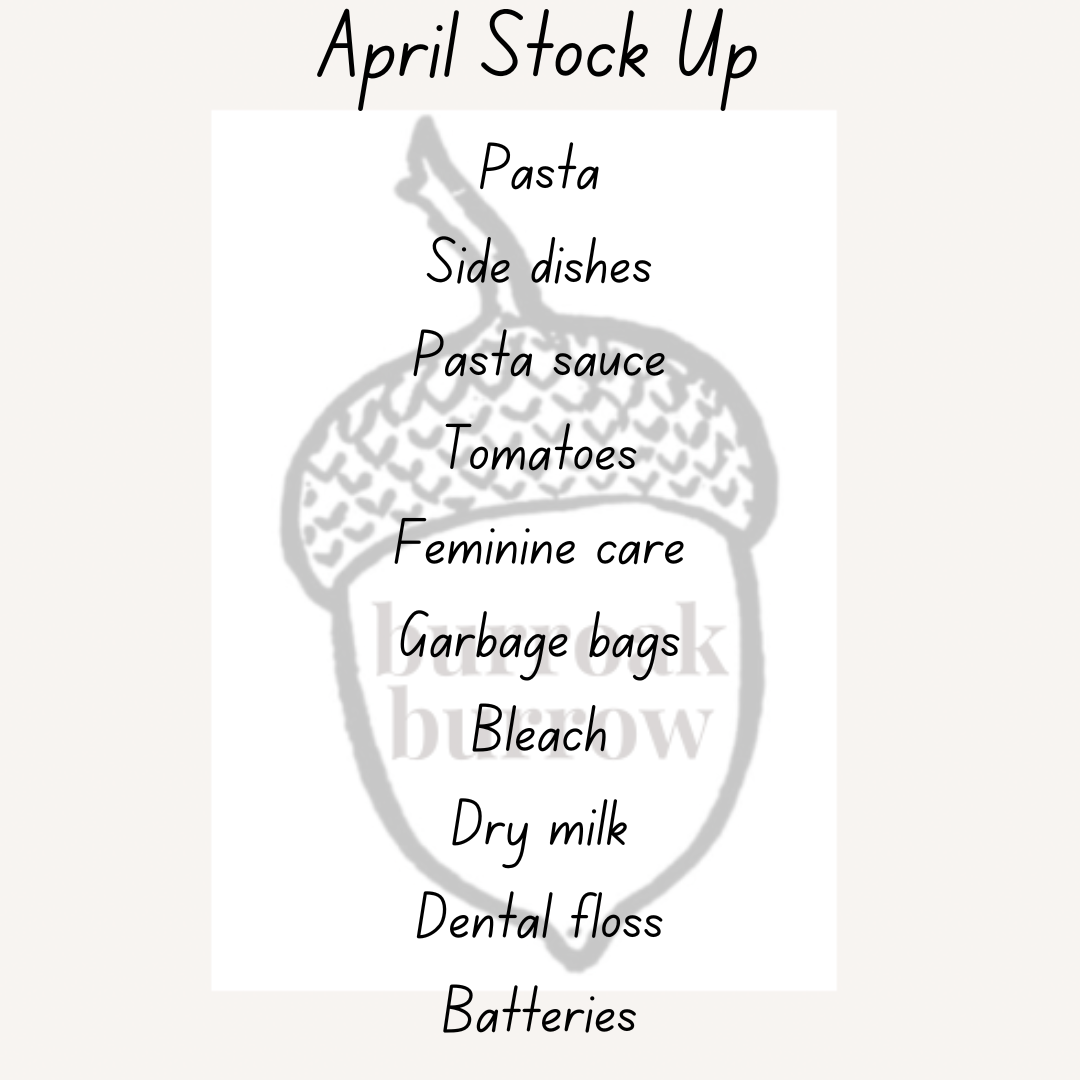

March Stock Update
March is nearly over! I hope everyone has had a good month full of celebrations. I’m so thankful to have a long weekend with my family.
I didn’t buy much on this stock up as any extra went towards the holiday meals and garden supplies (which count as stocking!). Here’s a quick example of some of the stuff I picked up.

The beans and lentils are quite cheap if you buy them dried and they last for a really long time if you store them properly. They’re even cheaper if you buy them in bulk, but little bags like this are perfect to pick up every time you shop as they’re only a couple dollars and they add to your stock quickly.
I like to buy our over the counter medications so that I have an open one, one on the shelf and one extra to put up then rotate through as they get used up. That way I never have to panic and run to an all night pharmacy when the kids wake up sick.
I use the same stocking system when it comes to other non perishables, such as the cleaning supplies I bought for March spring cleaning.
Its beginning to look like a greenhouse in my living room (the only place with good lighting) with seedlings and pots of dirt everywhere. I’ve also started foraging for early spring plants as they’re popping up everywhere and in large, sustainable amounts.
What did you get up to in March? Have you started seeds? Did you take advantage of the sales related to the holidays? Do you now have pounds and pounds of chocolate?
Make sure to follow us on social media to keep up with everything that doesn’t necessarily make it to the blog!
Scenario: settler winter
Here’s a quick scenario I posted on my social media accounts, let’s get YOUR thoughts!
Scenario time: it’s back to little house on the prairie. Winter is coming. You have nothing but the clothes on your back and a house. What do you need to survive winter (family of 4 let’s say)
Foraging Garlic Mustard

Let me start off by saying I meant to blog this last week but I ended up with a sick kid and TWO emergency visits to the vet with my dog (that was an unexpected nearly $1000 bill!) and I’ve been making as much products for my business as I can to make up for the expense.
Anyways, garlic mustard grows nearly everywhere. It’s one of the first plants to come up in spring and most people think it’s just a weed. It’s all over my yard right now and the park we go to is full of it, it’s very easy to get lots of it.
The smell is obviously oniony/garlicky. I’ve seen people add it to salads but I personally like to make it into a pesto with lemon juice or just purée it. Then I put it in ice cube trays and freeze it, adding it to dishes as I need.
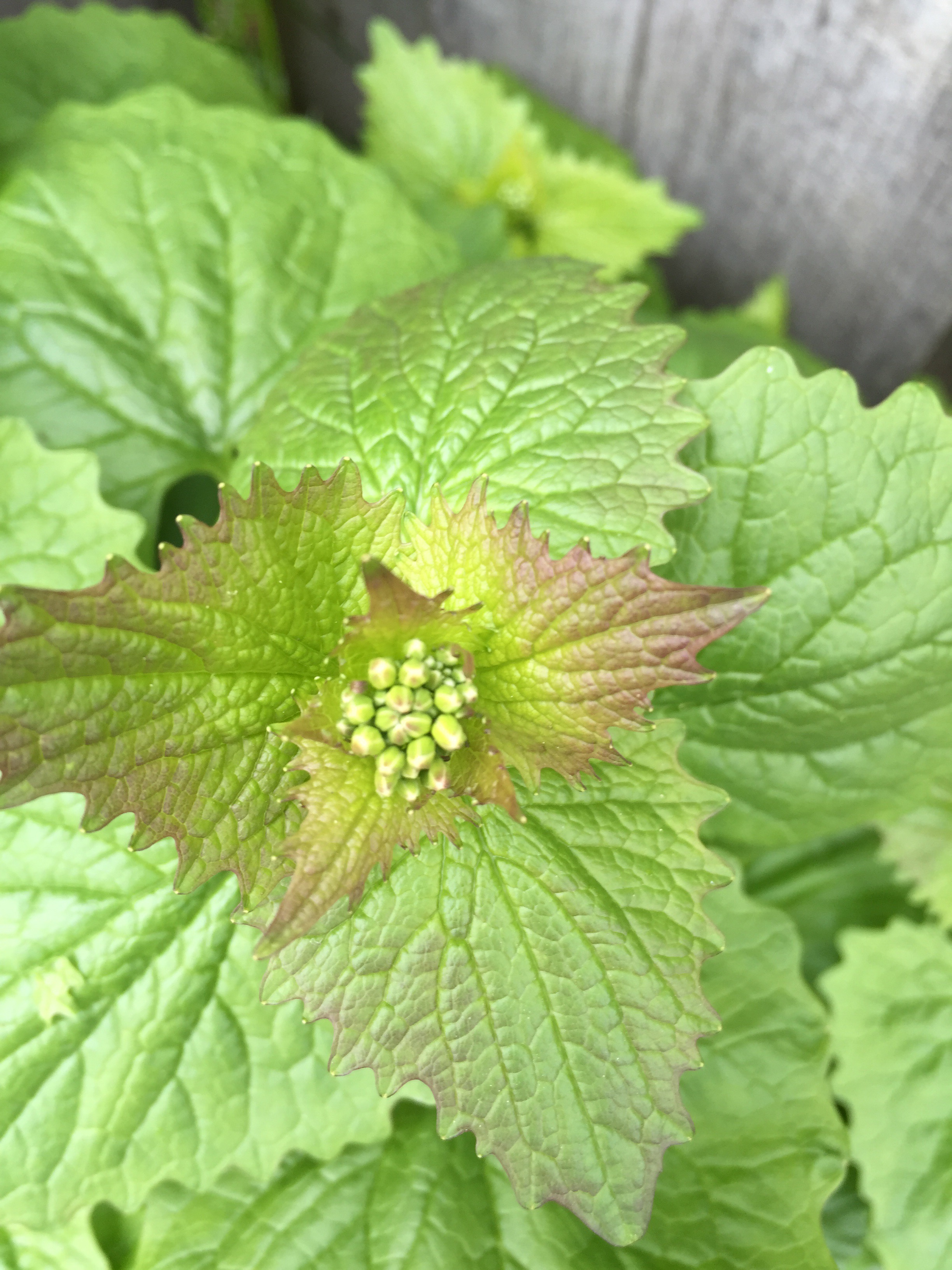 (My camera did well for this pic! I love it)
There’s a close up of the leaves and flowers, when the flowers open they are small and white. There’s lots of information around the web on garlic mustard so make sure you research before you forage!
Good luck finding it and I hope you like it!
First Aid Supplies
First aid supplies are essential to any prepper’s stocks. The majority of preppers I know have lots of guns, ammo, food and water but barely any medical supplies. It is essential that you know the basics of first aid so you can take care of yourself and your family should something happen. During an emergency, hospitals are generally flooded with patients in varying degrees of illness and injury. It could take hours before you see a doctor and in the case of a pandemic scenario, one of the most likely places to pick up the disease is, of course, the place where all the sick people are hanging out (but if you truly need medical attention, do not hesitate to get it!)
First, I always recommend that everyone take a first aid and CPR course. These courses are generally offered by the Red Cross and other various organizations for very little money and sometimes free. They usually last a day or two and are worth every penny.
Store bought first aid kits are a great start but I like to customize mine with products I’m familiar with using, as well as rounding out some things I find missing. What you put in your kit of course depends on your medical knowledge.
Next, every household should have a bare minimum first aid kit including the following:
gauze
alcohol swabs
antiseptic
band aids
tape
non-latex gloves
tweezers
scissors
safety pins
thermal blanket (for treating shock)
triangle bandage (or large scrap of fabric)
hand sanitizer
maxi pads (can be used as a bandage)
needles and thread (fishing line or dental floss can be used in a pinch for stitches but please make sure your supplies are sterile)
basic medications (including ibuprofen, acetaminophen, anti-diarrheal, anti-nauseant, anti-emetic, etc)
This is just a basic idea of some of the things you should have around the house. Obviously, there is a lot more you can (and probably should) have but having the training to use these things can be a lot more important than the actual supplies. If you know how to treat the injuries, you can improvise the supplies.
I highly recommend having a First Aid manual on hand (paper copy), here’s an example of one I have at home: https://amzn.to/2xeieYT
Dehydrating Citrus – and Why It’s Important
Vitamin C is a very important nutrient that seems to be lacking in a lot of survival foods. Getting enough vitamin C is vital in an emergency situation. It is necessary for collagen synthesis (collagen is what heals your wounds, and knits the skin back together), without it your new wounds may not heal properly and older cuts may start to fall apart.
Enough vitamin C can cut back on how often you get colds and flus and cut back on how much they affect you. It can also delay the onset of certain neurological disorders such as Alzheimers. It is essential for drug metabolism, helping medications to reach their full potential in your system.
Sources of vitamin C include: broccoli, sweet bell peppers, sprouts, kale, spinach, tomatoes, strawberries and of course citrus fruits. Citrus can be found easily and cheaply by almost everyone and it is so simple to dehydrate.
Pick nice, firm just ripened fruits. Cut into thin wheels (1/4″) and lay on your dehydrator trays. Using a temperature controlled dehydrator, set it to 125° F. It takes about 6-8 hours depending on the humidity in your area, it could also take more. (Here’s my dehydrator: https://amzn.to/39aoRbO )
To use your citrus, you can place it in glasses of water or juice to add flavor or you can powder the inner parts to make juice mix. Make sure to store your fruit in airtight containers in a cool dry environment.

dehydrated oranges
Basic EDC
An EDC, or Every Day Carry, is a kit that you take with you everywhere. It is smaller than a bug out bag and a bit more than most people usually carry. It is a good idea to carry one of these in your backpack, work bag or purse. Do not leave it in your car (I’ll cover car kits another day).
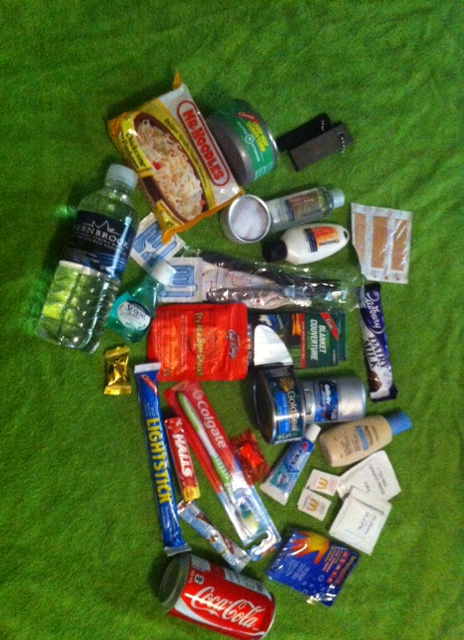
A basic EDC has enough stuff to get you home should you be stranded at work or school. You can think of it as an extended overnight bag if you will, I usually have most of this stuff in my purse. A basic kit might include:
soap
shampoo and conditioner
toothbrush and toothpaste
a can of tuna or other high protein food
a higher carb option (as seen in the picture –ramen noodles)
chocolate or candy
space blanket
a way to start fire
a candle or other heat source
a flashlight or glow stick
tea, coffee or other hot drink
water
a higher sugar and energy content drink (soda or sports drink)
first aid items (the metal tin in my photo contains cotton, ibuprofen and other basic medicines)
Also included (but not seen in the picture) is some money, self-defense tools, a small notebook of basic survival information, basic maps of the city and surroundings, chap stick (which you can use as a fire starter in emergencies) and a book or set of cards in case you get stuck somewhere.
Bug Out Bags 101
A bug out bag is a bag that you keep full of supplies ready to go at a minutes notice in case of an emergency where you leave your home. It is also known as a GOOD bag (Get out of Dodge) or a 72 hour bag. There is a few different types depending on what your plan is. Be sure to use a heavy duty bag with good supports (such as a waist band and thick straps, possibly with metal framing).
A basic bug out bag contains everything you would need to survive for 72 hours away from home or as long as it would take you to get to your retreat spot, including:
Shelter (such as a tent and sleeping bag, making sure to buy weather appropriate)
Food (usually light weight such as dehydrated or freeze-dried and a way to cook said food ie: pot, mini camp stove or fire making implements)
Water or a way to purify water (here’s a handy mini filter I keep in my purse)
First aid requirements (bandages, alcohol swabs, gloves, gauze etc)
Any medications you or your family requires
Small amount of cash
Hygiene needs (toothbrush, toothpaste, comb, shampoo, fem care etc)
Self defense
It’s also a good idea to have a survival manual of some sort and a copy of any important documents (birth certificates, deeds etc which you can scan and put on a thumb drive)
Many people carry an EDC (everyday carry bag) which includes a lot of the stuff already mentioned but it is said in the prepper/survival universe: “two is one, one is none.” or as I say “rather too much than too little”. Your bug out bag should be as individual as you are. No one can tell you exactly what to put in your bag because we don’t know where you are or where you are going. I do recommend the above list as a starting point and that every family member have their own bag in case someone gets separated from the group. It is a good idea to keep your bug out bag readily accessible (in the front hall closet etc) so you always know where it is. Keep in mind this is a very basic list to get you started on thinking about what you might need. Just remember, you will have to carry this at least part of the time so make sure it doesn’t weigh you down so much that you can’t function. A good exercise is to strap on your bug out bag and go for a hike, see how far you can make it with the weight and adjust as necessary.
Heat Illness
All over North America, we have been having crazy heat waves. In some places, people have been without power due to bad thunderstorms. Today its only 91° where I am but the other day was 114° and most of my family was sick due to the heat (not to mention sweaty and miserable).
Its important to recognize the signs and symptoms of heat illnesses (hyperthermia), especially in a survival situation where you can’t just pop into the mall with air conditioning.
There are a few levels of heat illnesses which progressively get worse if you don’t take care of yourself.
Heat Cramps: are caused by not having enough water and being too hot. Symptoms include: thirst, sweating, irritability, gastro symptoms (nausea, vomiting) and of course cramps (particularly in the abdomen).
Heat Exhaustion: excessive sweating, dizziness, headaches, confusion, COOL to the touch as well as all the previous symptoms. Treat these people as being in shock (but do not cover with a blanket, instead remove excessive clothing).
Heat Stroke: skin will be hot in heatstroke because the mechanism that makes you sweat to cool you down isn’t working anymore. The person suffering might be in shock, confused, as it gets worse you can start seeing things such as unconsciousness and seizures.
Always try to get the victim out of the heat (indoors or into shade). If they are conscious get them to drink cool water (but do not force them if they vomit). To increase cooling you can sponge them with cool water or cover them with cool wet sheets. Obviously, if available, get your person emergency medical attention as soon as possible.
Try to avoid heat illnesses by avoiding heavy work in severe temperatures, wearing hats and staying hydrated.
 BurroakBurrow