Blog Archives
Water Ban!
On Tuesday this week, a water main broke at one of the biggest reservoirs serving our area. We were originally on a water restriction that has now been replaced with a ban. Our city still has tap water but a lot of the smaller towns right around us don’t even have that.
According to our local media, our city uses on average 140 million liters of water per day (about 40 million gallons) but yesterday, our city used 200 million liters (about 53 million gallons). People were seen watering their lawns, washing their driveways and running sprinklers for their children.
Most people in my area do not have a water storage and now a lot of grocery stores are low or out of bottled water. We haven’t had a water ban since 1998. We are surrounded by the Great Lakes so who would think you would need it, I guess is what most people think. BUT:
– this past weekend was Victoria Day, a long weekend that has long been the ‘safe point’ to start your gardening in our area. Many people that participated in the water ban now have dead plants because they don’t have a rain barrel or don’t use their grey water.
– the next town over has no tap water so no showers, no drinking water, no dishwasher and so on. Do you have enough water stored for at least three days of drinking, watering your veggie garden and giving to your pets?
The weather was 30°C (86 F ) yesterday and muggy, I can understand people want to cool down. Here’s a few ideas (based on what I saw in my neighborhood and on social media) for water conservation.
Instead of filling the pool or running the sprinkler for the kids, give them a popsicle, they’ll love you for it!
Stay indoors between the hours of 11-3 when the sun is at its hottest.
As a lesser evil, turn on your air conditioning unit rather than leaving water running.
Take a shorter shower (or use the dry shampoo recipe I gave a few posts ago)
Use paper plates or eat out of the pots that you cook in.
When you shower, leave the plug in and collect the water for use in your garden (grey water)
Buy (or make) a rain barrel (this one is similar to the one I own)
Don’t water your lawn, it will make it grow and then you have to cut it!
Moral of the story: you should probably have some cases of bottled water put aside for drinking and a rain barrel or grey water system (or both!) for your veggies.
Hair in Emergencies
I’d like to thank Sandy for pointing out the hair aspect of a SHTF scenario.
Personally, I plan to either cut my hair very short or shave it to cut down on the possibility of lice, fleas and other parasites that might like to live in it. This might not appeal to you and then, if you do it, what happens when your hair grows back?
Well, you can keep it short or you can try and keep it clean. I have bottles of shampoo put aside just in case but I also keep small sample size bottles in our bug out bags. I can use them or there is always the potential for barter or just giving away to those that might be in need.
An easy way to keep your hair clean (well, cleanER) is to use a dry shampoo. This is great for conserving your precious water supplies as well.
To use a dry or waterless shampoo, put the powder in your hair, let it sit a few minutes and then brush it out.
A simple recipe is just using corn starch or baby powder (I’ve also used arrowroot powder) mixed with a few drops of essential oils – citrus is good for absorbing oils, tea tree is good for deterring bugs and lavender is anti-septic and anti-bacterial.
You can also keep a few hairbrushes and hair ties in your preparations as well as some razors if you decide to shave your head or to barter with.
Commonly Overlooked Preps Part 2
Here’s part two of the list I posted earlier.
Soil – I know people that have tens of thousands of seeds but no soil. What happens if you have to plant inside? Or if the soil where you are is too sandy or too much clay? A couple bags of decent quality potting soil are a good idea to keep around. I recently got 10 20 liter bags of soil for $10.
Pets- please don’t forget your four legged friends! Make sure you have food and water put aside for them. You can put aside a couple of bags of kibble that your animals usually eat but you can also make your own dehydrated pet foods. I have also begun to see dehydrated animal food at the specialty pet stores. Just remember if you’re using dehydrated foods to have enough water to rehydrate. Which brings me to the next point.
Water – Yes, most of us have enough to drink but a lot of preppers have dehydrated foods. You need to consider how much water these things will take to rehydrate. What about gardening? There’s really no way to calculate how much water you would need for gardening but using a rain barrel can offset that. But keep in mind, there could always be a drought and if you’re counting on a garden as a large part of your food you better have a back up plan.
Garbage Bags – most people plan to burn their garbage, which is fine. But how about disposing of a body? You don’t necessarily want to be handling that. Or if you have lice, you can bag your clothing and bedding for a couple weeks to kill the lice. You can also use it for quarantine purposes. Make your ill person strip down, bag the clothes and get them into something clean. How about blacking out windows? Using a heavy duty garbage bag taped over windows can help to hide any light showing through (you may have to double up though)
Commonly Over Looked Preps
As I talk to more and more people about their preparations, I’ve noticed some things that a lot of them seem to have over looked. (This, of course, is no judgment on them). Here’s a bit of a list of the ones that I’ve noticed over and over.
Entertainment – there is no way I can express how important this really is. It doesn’t matter if you have 30 years of food and water in your location, if you have nothing to do, you WILL go stir crazy. Put a book in your back pack and have everyone in your group do the same, or stock up your retreat location with some books you’ve never read. You can get books cheaply at garage sales or for free on buy nothing groups on Facebook. Get a deck of cards or some board games. If, for whatever reason, these things are not feasible for you, make a routine as soon as possible in the situation you’re facing. People thrive on routine. (example: wake up, make breakfast, check traps, have lunch, tend garden, make tools, etc). The last thing you need to deal with in a SHTF situation is cabin fever.
Oven mitts/Pot holders – almost everyone I’ve spoken to has the plan to cook over fires but none of them have oven mitts or pot holders to protect their hands. While this isn’t necessary and there are tools that you can fashion out of sticks to do the same thing, pot holders will protect your hands from the burns that you ARE going to get. You can get a pot holder at a dollar store or use a bandana or scrap of fabric.
Burn care- this goes with the pot holders. People will get burned; a lot of people are relying on fire to cook, clean and heat. There will be burns. I see the med kits people have and most of them focus on cuts or illness. While living in a SHTF scenario, yes, there will be a lot of cuts too but burns require care to prevent infection. Get a tube of burn ointment and bandages or whatever your preferred method of burn care is and have lots of it! (I use straight lavender essential oil for burns, more on this in a later post).
Water additives- it is easy to get diet fatigue when you’re drinking nothing but plain, sometimes boiled, tasteless water. I recommend, especially for those of you with kids, that you stock up on some additives such as Kool Aid, Crystal Light or whatever your favorite drink crystals are. These don’t take up much room and can add a sense of normalcy to your situation. (We use these in our bags, the kids love them)
Again these are just some of the things I’ve noticed and I’m sure I’ll add to the list. Make sure you think of how you’re going to survive and all things required if you had to start from scratch. A big part of prepping is planning!
Prepping When You Have No Money
Earlier this week, I realized I haven’t been doing as much prepping as I wanted to. I don’t have as much done this far in the year as I had planned and am far behind my goals. Money has become tight, as I’m sure is the case for a lot of people. I’ll be honest, it got me down for about a day.
But! There’s lots that you can do that takes no money at all. I started out by taking inventory of what I do have and looking again at my list of what I would like to have. Reassess and reevaluate your goals.
Next I spent hours watching videos on everything prepping and survival that I could find. YouTube is great for this, but make sure you take everything with a grain of salt. The people that make these videos could be anyone, just like you or me. So really think about the things that these people do and say but there really is a wealth of information out there, for free. So find the videos and take notes. There is also a lot of information on Facebook groups and hashtags on twitter (check out #preppertalk for one)
After that, I decided I could use to be in a bit better shape. If the S were to HTF, being in good physical condition would definitely make it a bit easier. So, I revamped my workout routine. Anyone can work out and you don’t need gym equipment and you don’t even need to run. One of the easiest things you can do is sit on the couch and watch an hour long program. Each time there is a commercial, do 20 sit ups or push ups. That should give you close to 100 in an hour! If that’s too much work, cut it down to 10 or 5 or even 1, anywhere is a good starting point. By doing the exercise in small sets, it doesn’t feel like as much of a work out. This is how I started a while ago, now I can just do the 100 sit ups or push ups in a row (which means it’s time to up my numbers or make it harder.)
The last thing I did was mentally prepare. I realized that I may not have thousands of dollars tied up in my preparations but at least I have prepared. That’s more than what most people have done. I thought about what could happen in my area (snowstorms, tornadoes, economic collapse etc) and thought about how my life would be affected. What would I do in _____ situation? What if _____ happened? And make your plans from there. What would it take to get you to bug out? Where would you go? What would you bring? Make your plans and constantly reassess them, always be willing to change them and be flexible!
Starting Seeds
Starting seeds doesn’t have to be rocket science. You don’t need green houses and heat lamps. Kindergarten children plant beans in their classrooms to learn about spring time.
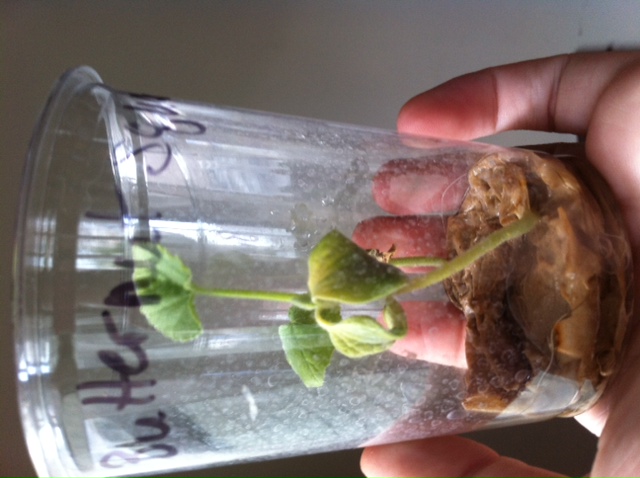
All you need is a cup, some paper towels or napkins, some water and a window sill.
I use clear plastic party cups to start my seeds. I stuff a little bit of brown paper towel in the bottom and then add water. I let the paper towel absorb as much water as it can, then pour any extra out. I put two or three seeds in each cup then set the cup in a warm, sunny window sill. After a couple days to a week, the seeds should start showing some signs of life. If they haven’t, don’t give up, recently my cantaloupes took almost three weeks to start sprouting. Keep your paper towels moist (but don’t drown your little roots) and wait. Once your plant has developed a good size tap root (the biggest root in the middle that the other roots sprout from), carefully pull the plants out of the cups and put into some good quality potting soil until it’s warm enough to plant outside.
This is how we start the majority of our seeds. Currently we’ve got every window sill full of beans, peas, carrots, peppers, chilies, butternut squash, sunflowers, radishes, cucumbers and countless herbs. This is also great for any little helpers you might have hanging around (children, grandkids?), they usually get very excited to see their little projects grow.
I’ve personally used these seeds in the past and was very pleased with quality.
Regrowing Your Celery
The next time you’re working with celery, don’t throw out the little bit at the root end. If you save the end piece, you can regrow the celery and have another whole stalk for free. I’ve been doing this personally only for a few months but I have very impressed with the results, I’m sure you will be too.
Cut off the end of your celery stalk and place the bottom piece in a container. I usually use a bowl or a little Tupper with a wet napkin or paper towel. Place the bowl in a sunny spot, like a window sill and leave it there. Make sure the napkin or paper towel stays moist. The outer pieces of the celery will brown and rot but the middle pieces will shoot up.
When you have about an inch or so of growth, stick the celery piece (which should now have a little bit of roots) into some good potting soil and watch it grow! When you need some celery, cut it off of this plant but leave the plant in the ground, it will continue regrowing as long as you take care of it.
I love this idea because I like to dehydrate celery; it works so well and is a great flavor to add to many recipes. So having free celery instead of paying over $3 each time is awesome.
I have also used green onions the same way as well as cooking onions, leeks and garlic. Experiment with it! Have fun!

Dehydrating Broccoli and Using It
To dehydrate broccoli, first cut it into bite sized pieces and blanch for about a minute in boiling water. This will help to maintain the green color (otherwise it goes a nasty brown). Plunge the hot broccoli into some cold or iced water to stop the cooking process. Drain to get as much water off as possible. I then spray with a bit of lemon juice (also helps the green color). Place on your dehydrator trays (not touching otherwise you get damp spots). It usually takes my dehydrator about 6 to 8 hours to dehydrate broccoli. Store as you would other dehydrated foods. Here is the dehydrator I use: (Excalibur Dehydrator)
To use your broccoli, here’s a simple but tasty broccoli soup recipe using things that are probably already in your food storage.
Broccoli Soup
3 cups chicken broth (approx 2 cans. You can also use water or water with bouillon cubes)
5 cups rehydrated (or fresh) broccoli (approx 2.5 cups dehydrated)
1.5 cups fresh (or rehydrated) onions (approx 3/4 cups dehydrated)
2 bay leaves
6 tbsp butter (can also use canned butter or butter powder)
7 tbsp flour
3 cups milk (can use reconstituted powdered milk)
Bring chicken broth (or water etc) to a boil. Add broccoli, onions and bay leaves. Reduce heat and simmer until broccoli is tender. Remember to remove your bay leaves.
In a separate saucepan melt butter and stir in your flour to make a roux (paste). Slowly stir in the milk and incorporate it into the roux. Cook until thickened. Add your broccoli mix slowly. Heat and stir until thick.
If you have no butter and flour to make a roux you can also thicken your soup with cornstarch (make sure it boils to cook out the cornstarch) or potato flakes.

Home Made MRE’s
Have you ever opened an MRE (Military ration) and thought half the stuff was gross? Or been allergic to some of it? What about people with gluten allergies or dairy allergies? That stuff is loaded with wheat, soy and milk products. And honestly, a lot of people are just plain picky.
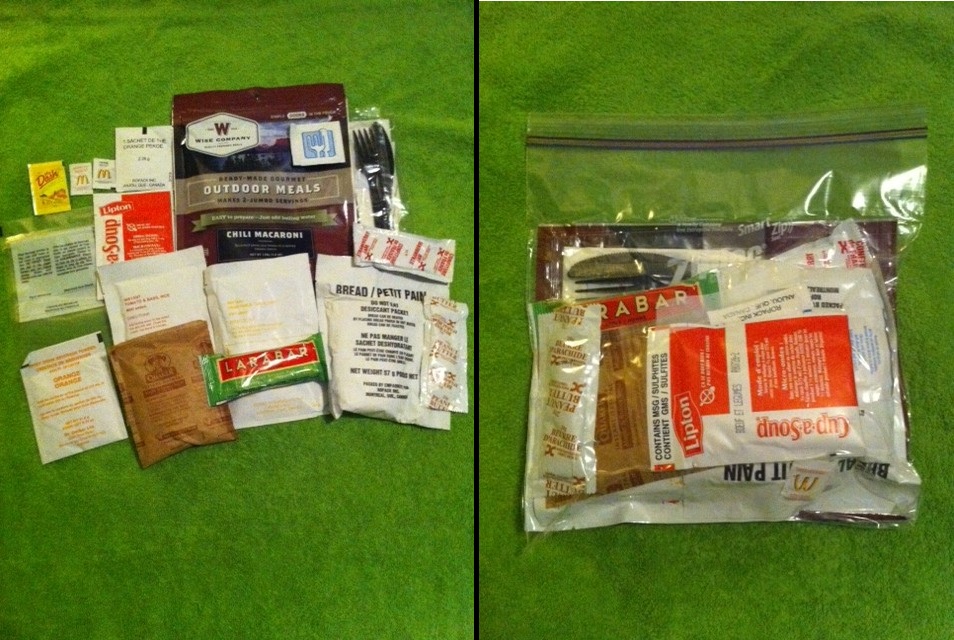
So I made my own MRE. I took apart some of my MRE’s that I got through the army and also searched through my cupboards. Here’s my example:
Freeze dried Chili Mac (made by Wise Company – thanks to TF for sending it!!)
Instant Vegetable Couscous (from a MRE you can make your own, just throw couscous in a bag)
Tomato Basil Rice (from a MRE but you can make your own)
Vegetable Beef Cup of Soup (grocery store)
Bread (from MRE – limited shelf life but I have seen people use vacuum packed tortillas)
Orange sport drink powder (from a MRE but you can get individual sizes at grocery stores)
Peanut Butter and Jam (from MRE but can get from restaurants, also on amazon etc)
Oatmeal (grocery store)
LaraBar energy bar (available here)
Salt, pepper, tea and sugar (available at almost any restaurant… well, buy your own individually wrapped tea bags)
Once you have everything you want, throw it in a bag and vacuum seal it. Or put it in a Ziploc and use a straw to suck out the extra air. I’ve seen people do their own MRE’s with ramen noodles and dehydrated vegetables, macaroni and cheese (out of the box), packets of tuna, soup mixes, anything really. It is easy to go to the grocery store and buy shelf stable items. Just pick something you like and that you’ll eat and throw it all together! Later on, I’ll give you some ideas for the little ones in your survival group
Reusable Crocheted Bandages
Reusable Crocheted Bandages
I’d like to start out by saying this is not my pattern, I lay no claim to it. I got it from @yycbusymom and she got it somewhere else. If it’s your pattern, let me know.
So anyways, the idea is to make a bandage that is durable and reusable in a SHTF scenario. These bandages are easily made and can be boiled or bleached or washed to use again. Obviously there is a concern about blood borne diseases but I wouldn’t be reusing one unless I knew who it was on and what they have/don’t have. So family yes, strangers no, you can keep it, it’s really ok.
To make these bandages you need a 2mm sized crochet hook (get a basic set here) and #10 cotton crochet thread. (here’s what I use: Crochet thread )
To start, chain 26 stitches. Turn and single crochet into your last stitch (thereby making your bandage 25 stitches long.) Single crochet across your row. At the end, chain one, turn and single crochet into the first stitch.
Continue to single crochet the bandage until the desired length is reached. (You can do several, some 3′, some more. Yycbusymom was going to do some 10′ in case of a chest wound etc.)
When you’re done, tie off like you normally would, roll the bandage and put it into a plastic bag to protect it. (If you’re like me, you’ll have to wash it first, too much stuff gets on it while you’re making it).
This is a great little project to keep your hands busy. I keep one to work on in my purse so I can do it in waiting rooms, on the bus or wherever I might be.

 BurroakBurrow