Blog Archives

Using the Tomato Harvest: Salsa!
Every year, I make my own salsa and can it. Every year I make more than the previous year and I still haven’t managed to be able to make it last over the winter. My vegetables this year in the garden did terribly, so when I saw that the grocery store had 50 lbs of tomatoes on for $10, I jumped all over that chance.
Here’s my favorite salsa recipe. I got it originally from my friend Judy (may she rest in peace) and altered it because she doesn’t add nearly enough heat for my family.
Salsa:
8 cups of Roma tomatoes (peeled and chopped)
4 cups onions, chopped
4 cups sweet peppers, chopped
1/4 cup vinegar
5 cloves garlic (or to taste)
Jalepeno pepper or to taste (I usually add a lot of jalepenos and Thai chilies but we like it really spicy)
1/4 to 1/2 tsp oregano (to taste)
1/2 tsp coriander
2-3 tbsp salt
Cook until veggies are done then add a small can of tomato paste. Cook for another
5-10 minutes then put into sterilized jars. Place your filled jars in a water bath canner and process for 20 minutes.
Home canned foods can last a long time but are usually best if consumed within a year to 18 months of canning.

Preserving Corn (While We Can Afford To)
Thanks to the weather conditions all over North America, crops are failing at alarming rates, especially corn. The price of corn has sky rocketed and I can only assume will continue to do so. Corn is of course animal feed but it is also a major ingredient in just about everything we buy today. I went to the farmers market and was asked to buy corn for $5 a dozen (this of course is locally grown but not organic). Later that same week, corn was on sale at the grocery store for $2 for 10 cobs. I grabbed as much of the $2 corn as I could (it also happened to be local).
You can freeze a cob of corn as is. No prep. Don’t shuck it or cook it, just throw it in the freezer (although I usually look for bugs and give it a rinse first). To cook your frozen cobs of corn, you can cook them with the husks on (takes a bit longer) or you can husk them while frozen and just throw the frozen corn in the boiling water just like you would if it was raw. The corn is best if used before 8-12 months in the freezer.
Corn can be canned using a pressure canner. Because it is a low acid food, you cannot properly can corn in a water bath canner. Make sure you use an USDA approved corn canning recipe.
The easiest and most space effective way for me to preserve corn is of course my ever faithful dehydrator (which you can purchase here). To do this, you can cook your corn as if you were going to eat it. Once it is cool to the touch, slice the corn off the cob. Break up the little pieces of corn and spread it out on your dehydrator trays. It takes around 6 hours (or more depending on the humidity in your area) for the corn to dry. I find frozen bagged niblets of corn dehydrate a lot faster (and sometimes nicer) than your own cobs. Once it is dehydrated, you can enjoy it as is for a snack. It is sweet and crunchy (make sure you drink lots of water). You can also grind it into corn meal or corn flour. You can add it, as is, to soup or stews.
I’m personally going to do as much as I can. There has been rumor of the cost of corn going up to $9 a bushel in some areas.
Make sure to store your dehydrated corn in a cool, dry area in a airtight container.

10 cobs of corn fit into one standard sandwich bag when dehydrated
Dehydrating Citrus – and Why It’s Important
Vitamin C is a very important nutrient that seems to be lacking in a lot of survival foods. Getting enough vitamin C is vital in an emergency situation. It is necessary for collagen synthesis (collagen is what heals your wounds, and knits the skin back together), without it your new wounds may not heal properly and older cuts may start to fall apart.
Enough vitamin C can cut back on how often you get colds and flus and cut back on how much they affect you. It can also delay the onset of certain neurological disorders such as Alzheimers. It is essential for drug metabolism, helping medications to reach their full potential in your system.
Sources of vitamin C include: broccoli, sweet bell peppers, sprouts, kale, spinach, tomatoes, strawberries and of course citrus fruits. Citrus can be found easily and cheaply by almost everyone and it is so simple to dehydrate.
Pick nice, firm just ripened fruits. Cut into thin wheels (1/4″) and lay on your dehydrator trays. Using a temperature controlled dehydrator, set it to 125° F. It takes about 6-8 hours depending on the humidity in your area, it could also take more. (Here’s my dehydrator: https://amzn.to/39aoRbO )
To use your citrus, you can place it in glasses of water or juice to add flavor or you can powder the inner parts to make juice mix. Make sure to store your fruit in airtight containers in a cool dry environment.

dehydrated oranges
Strawberry Jam – no pectin
Strawberry jam is a yearly occurrence in our house. Everyone loves strawberries (so much in fact that last year when I purchased two flats of strawberries, they were gone in a few days before I could make the jam). I always use local strawberries because the flavor is amazing (so much more so than berries that have ripened on a truck).
This is the recipe my grandmother used, I’m pretty sure it’s the Bernardin recipe, so clearly I don’t own it.
Place 8 250ml size jars (available here) on a rack in a water canner and heat to a simmer (make sure water is covering the jars). Heat snap lids separately. Keep hot until ready for use.
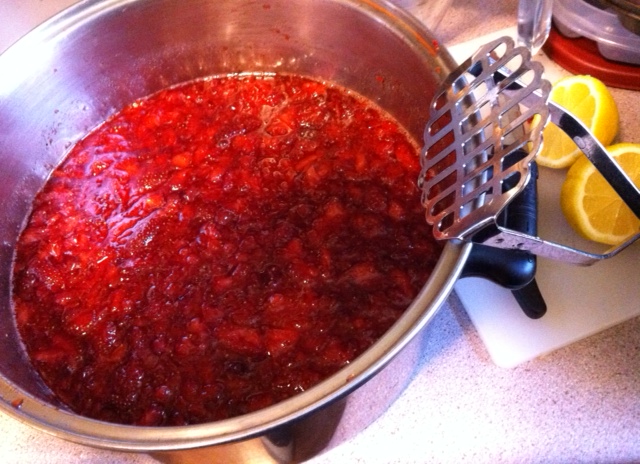
Bring mixture of 8 cups strawberries (crushed), 6 cups sugar and 1/3 cup lemon juice to a boil slowly. (make sure sugar is dissolved so it doesn’t stick to the bottom). Boil for about 30 minutes or until the mixture thickens and passes the ‘gelling test’. (Coat a spoon with the jam and move it away from your pot, watch the jam slide off the spoon, if it falls in chunks instead of drips, its ready).
Pour your hot jam into the hot jars leaving a quarter inch of headspace. Keep your rims clean! Place your snap lid on the jar and screw the band on until finger tight. Boil filled jam jars for 10 minutes. Pull out and let sit for 24 hours (do not move them).
Traditionally, items canned like this last for about a year (not exactly long-term food storage) but I’ve used them after the year has come and gone.
Dehydrating Broccoli and Using It
To dehydrate broccoli, first cut it into bite sized pieces and blanch for about a minute in boiling water. This will help to maintain the green color (otherwise it goes a nasty brown). Plunge the hot broccoli into some cold or iced water to stop the cooking process. Drain to get as much water off as possible. I then spray with a bit of lemon juice (also helps the green color). Place on your dehydrator trays (not touching otherwise you get damp spots). It usually takes my dehydrator about 6 to 8 hours to dehydrate broccoli. Store as you would other dehydrated foods. Here is the dehydrator I use: (Excalibur Dehydrator)
To use your broccoli, here’s a simple but tasty broccoli soup recipe using things that are probably already in your food storage.
Broccoli Soup
3 cups chicken broth (approx 2 cans. You can also use water or water with bouillon cubes)
5 cups rehydrated (or fresh) broccoli (approx 2.5 cups dehydrated)
1.5 cups fresh (or rehydrated) onions (approx 3/4 cups dehydrated)
2 bay leaves
6 tbsp butter (can also use canned butter or butter powder)
7 tbsp flour
3 cups milk (can use reconstituted powdered milk)
Bring chicken broth (or water etc) to a boil. Add broccoli, onions and bay leaves. Reduce heat and simmer until broccoli is tender. Remember to remove your bay leaves.
In a separate saucepan melt butter and stir in your flour to make a roux (paste). Slowly stir in the milk and incorporate it into the roux. Cook until thickened. Add your broccoli mix slowly. Heat and stir until thick.
If you have no butter and flour to make a roux you can also thicken your soup with cornstarch (make sure it boils to cook out the cornstarch) or potato flakes.

Dehydrating Carrots
I like to dehydrate my own vegetables. I find it is cheaper than buying the #10 cans of dehydrated vegetables. My own dehydrator is sort of lack luster. It was $30 and has large holes so I can’t dehydrate everything I would like to (saving up for a nine tray Excalibur though! ~ update: I got one and love it! You can find one here )
One of my favorite veggies to dehydrate is carrots. They are easy, get super small and I add them to a lot of different dishes (soups, stews, in the pan with roasting meats etc).
To dehydrate carrots, I first peel them and chop off the tops. I then slice them very thin ( 1/8 “) on a mandolin but I have also used a knife (doesn’t take me too long because I was a chef but could take someone with lesser knife skills all day to do the amount as thin as they should be). You need to blanch the carrots next. To do this, plunge the slices into boiling water for about a minute and take them out and put them in ice water. I usually use a metal strainer to put the carrots in the boiling water then I’m not fishing after all the little bits with a slotted spoon. I don’t normally have ice so I just rinse the slices with very cold water to stop the cooking process.
After your carrots have been blanched and cooled quickly, you arrange your carrots in a single layer on your dehydrator trays. My dehydrator has a recommended setting for vegetables (135°) so I set it and leave the carrots for a good 6-8 hours. I then test a couple of pieces of carrots by taking them off the trays, let them cool down then try to bend them. If they bend, put them back in. If they snap or crack, they’re done!
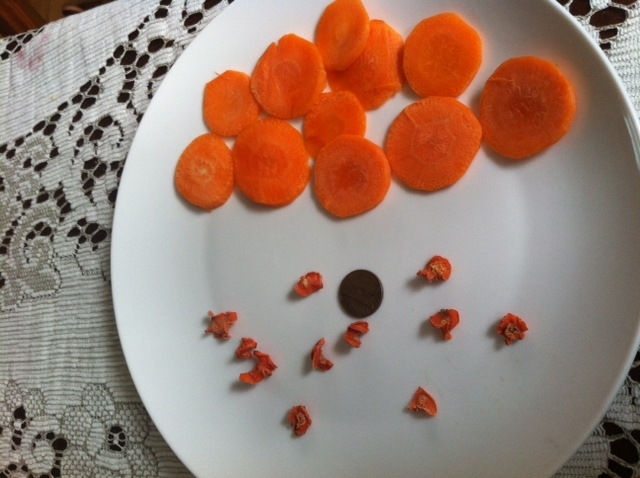
In the picture are raw sliced carrots and the dehydrated carrots. For size comparison, I’ve added an American penny.
Store in vacuum sealed mason jars in a dark place, or in mylar with an oxygen absorber for long term use.
Another Storage Recipe: Scones!
Here’s another recipe you can make using your food storage. I have made this with dehydrated versions of the ingredients and it works well. This is a traditional Irish scone, passed down through the family.
2.5 cups flour
1 tsp baking soda
2.5 tsp baking powder
3 tbsp sugar
1 tsp salt
1/2 c butter
1 egg
1 c buttermilk to mix. (you can also use water or 2% milk for this, it just tastes way better with buttermilk)
You can add a great deal of different things to these. My favorite is to add cheddar cheese (about a cup worth). I have also added raisins, currants, lemon zest, garlic powder, poppy seeds, etc, etc.
Mix it into a thick dough. (You may need to add more milk or more flour). Roll out to 1/4″ – 1/2″ thick. Bake at 375* F for 12-15 minutes.
Enjoy!
 BurroakBurrow