Blog Archives
First Aid Supplies
First aid supplies are essential to any prepper’s stocks. The majority of preppers I know have lots of guns, ammo, food and water but barely any medical supplies. It is essential that you know the basics of first aid so you can take care of yourself and your family should something happen. During an emergency, hospitals are generally flooded with patients in varying degrees of illness and injury. It could take hours before you see a doctor and in the case of a pandemic scenario, one of the most likely places to pick up the disease is, of course, the place where all the sick people are hanging out (but if you truly need medical attention, do not hesitate to get it!)
First, I always recommend that everyone take a first aid and CPR course. These courses are generally offered by the Red Cross and other various organizations for very little money and sometimes free. They usually last a day or two and are worth every penny.
Store bought first aid kits are a great start but I like to customize mine with products I’m familiar with using, as well as rounding out some things I find missing. What you put in your kit of course depends on your medical knowledge.
Next, every household should have a bare minimum first aid kit including the following:
gauze
alcohol swabs
antiseptic
band aids
tape
non-latex gloves
tweezers
scissors
safety pins
thermal blanket (for treating shock)
triangle bandage (or large scrap of fabric)
hand sanitizer
maxi pads (can be used as a bandage)
needles and thread (fishing line or dental floss can be used in a pinch for stitches but please make sure your supplies are sterile)
basic medications (including ibuprofen, acetaminophen, anti-diarrheal, anti-nauseant, anti-emetic, etc)
This is just a basic idea of some of the things you should have around the house. Obviously, there is a lot more you can (and probably should) have but having the training to use these things can be a lot more important than the actual supplies. If you know how to treat the injuries, you can improvise the supplies.
I highly recommend having a First Aid manual on hand (paper copy), here’s an example of one I have at home: https://amzn.to/2xeieYT

Using the Tomato Harvest: Salsa!
Every year, I make my own salsa and can it. Every year I make more than the previous year and I still haven’t managed to be able to make it last over the winter. My vegetables this year in the garden did terribly, so when I saw that the grocery store had 50 lbs of tomatoes on for $10, I jumped all over that chance.
Here’s my favorite salsa recipe. I got it originally from my friend Judy (may she rest in peace) and altered it because she doesn’t add nearly enough heat for my family.
Salsa:
8 cups of Roma tomatoes (peeled and chopped)
4 cups onions, chopped
4 cups sweet peppers, chopped
1/4 cup vinegar
5 cloves garlic (or to taste)
Jalepeno pepper or to taste (I usually add a lot of jalepenos and Thai chilies but we like it really spicy)
1/4 to 1/2 tsp oregano (to taste)
1/2 tsp coriander
2-3 tbsp salt
Cook until veggies are done then add a small can of tomato paste. Cook for another
5-10 minutes then put into sterilized jars. Place your filled jars in a water bath canner and process for 20 minutes.
Home canned foods can last a long time but are usually best if consumed within a year to 18 months of canning.

Sick Boxes
Its coming up to back to school time and you know what that means. People are going to be sharing their coughs, colds and flus. Even if you don’t have kids, chances are one of your friends does, or the person behind you in line at the grocery store. The coming of fall just brings out all the fun illnesses that we get to deal with every year.
In our house, we like to be prepared for that sort of thing so we have what we call “sick boxes”. A sick box is just a kit of the typical things that you need while you are sick, all in one place, ready for the next time someone is sick without having to run to the drug store while feeling (and looking) miserable.
A typical sick box might include:
chicken soup
tissues
cough candies
cough syrup
anti-nauseant
anti-diarrheal
soda crackers
ginger ale
tea
honey
acetaminophen or ibuprofen
vitamin c/Echinacea or other herbal supplements
And whatever else helps you feel better without having to go get it.
A great advantage to doing up a couple sick boxes is that you can get all the supplies while they are on sale or with coupons and don’t have to pay full price or run out at 3 am when your kids are suddenly sick.
Dehydrating Citrus – and Why It’s Important
Vitamin C is a very important nutrient that seems to be lacking in a lot of survival foods. Getting enough vitamin C is vital in an emergency situation. It is necessary for collagen synthesis (collagen is what heals your wounds, and knits the skin back together), without it your new wounds may not heal properly and older cuts may start to fall apart.
Enough vitamin C can cut back on how often you get colds and flus and cut back on how much they affect you. It can also delay the onset of certain neurological disorders such as Alzheimers. It is essential for drug metabolism, helping medications to reach their full potential in your system.
Sources of vitamin C include: broccoli, sweet bell peppers, sprouts, kale, spinach, tomatoes, strawberries and of course citrus fruits. Citrus can be found easily and cheaply by almost everyone and it is so simple to dehydrate.
Pick nice, firm just ripened fruits. Cut into thin wheels (1/4″) and lay on your dehydrator trays. Using a temperature controlled dehydrator, set it to 125° F. It takes about 6-8 hours depending on the humidity in your area, it could also take more. (Here’s my dehydrator: https://amzn.to/39aoRbO )
To use your citrus, you can place it in glasses of water or juice to add flavor or you can powder the inner parts to make juice mix. Make sure to store your fruit in airtight containers in a cool dry environment.

dehydrated oranges
Basic EDC
An EDC, or Every Day Carry, is a kit that you take with you everywhere. It is smaller than a bug out bag and a bit more than most people usually carry. It is a good idea to carry one of these in your backpack, work bag or purse. Do not leave it in your car (I’ll cover car kits another day).
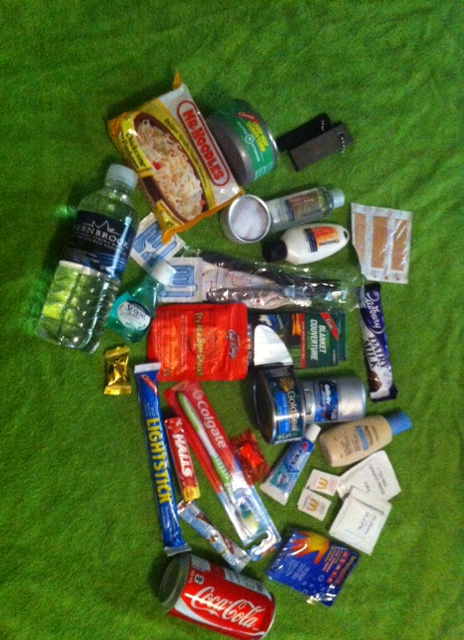
A basic EDC has enough stuff to get you home should you be stranded at work or school. You can think of it as an extended overnight bag if you will, I usually have most of this stuff in my purse. A basic kit might include:
soap
shampoo and conditioner
toothbrush and toothpaste
a can of tuna or other high protein food
a higher carb option (as seen in the picture –ramen noodles)
chocolate or candy
space blanket
a way to start fire
a candle or other heat source
a flashlight or glow stick
tea, coffee or other hot drink
water
a higher sugar and energy content drink (soda or sports drink)
first aid items (the metal tin in my photo contains cotton, ibuprofen and other basic medicines)
Also included (but not seen in the picture) is some money, self-defense tools, a small notebook of basic survival information, basic maps of the city and surroundings, chap stick (which you can use as a fire starter in emergencies) and a book or set of cards in case you get stuck somewhere.
Prepping for Feminine Hygiene
This is a subject that I haven’t really seen a lot of information on out there so I thought I’d let you all know what I do to prepare for those fun once a month times. Men, you may want to stick around too. (Got women in your family? Need something to barter?)
A while ago, I started a non-profit organization that makes and sends reusable menstrual pads to women in need. Before sending my first package (it went to Africa), I decided I can’t very well send a product that I don’t know anything about so I tried them for myself and never looked back.
The premise is simple. Why fill your valuable shelf space with packages and packages of plastic pads and tampons that you will only use once and then throw away. (Throw away where? Now a days to the dump where your biological material can seep out into the water system- gross. Or after an emergency, well I guess you could burn or bury it). I found a simple pattern online (using an envelope style pad with an insert) and make the pads from donated sheets, pyjamas etc. When done with it, throw it in the wash (or to avoid stains, soak in cold water first).
So, we’re saving space and the environment so far (not to mention the almighty dollar!!) Find a pattern online, sew together some pads and hang on to them. Even if you don’t want to use them now (or you’re a guy, or your daughters are too young) it’s not a bad idea to have a sustainable option for when you might need it. Again, you can barter with these if you don’t need them for yourself. My non-profit runs a program where if you buy one pad, one gets donated (we also just donate anyways but its nice to have a little bit of help in the running costs).
Want to make your own? There’s plenty of free patterns out there and most people have an old flannel shirt or something they can part with.
Not crafty? You can buy reusable pads here and menstrual cups here

Tips for Keeping Up Morale
Life post-SHTF will be very different than what we are used to. Different, harder, crueler and probably nothing like we expect it to be. We will have to deal with boredom (which can be a killer). People in the same environment for extended periods with a loss of privacy, a lack of hygiene, emotional issues, not to mention food fatigue and the digestive problems this can bring on will definitely need something to keep their minds off of things.
All of this is enough to bring anyone down. It is important to keep morale high. Boredom can lead to depression and depression can lead to a loss of will to live. This obviously is counter productive to our survival plans. So:
Give people a job to do, establish a routine. I’ve said it before, people thrive on routines. When you know what to expect and what your day looks like, it makes it easier to deal with.
Make sure you have entertainment. Books, games, decks of cards, coloring books for the kids, anything. If you don’t have a physical source of entertainment, put on a play, sing some songs or have a talent show.
Learn some skills that are fun and productive. Knitting or crocheting (which can be done with whittled sticks and plant made fibers!) can produce clothing, wash cloths, blankets and even nets for fishing. Wood working can make utensils (for eating and cooking), bows and arrows for hunting and improve your shelter!
Include some goodies in your preps. Candies or chocolates, stored in cool dark locations, can last almost indefinitely. I’ve seen freeze dried candies, as well as vacuum sealed mason jars of treats. (PLEASE do not throw out chocolate that has gone white! As a former chef I can tell you that it is NOT mold! It is called bloom and it is the fat in the chocolate separating. You can eat it as is or you can melt it down and mix the fats back in.) For the adults: a small bottle of your favorite liquor might be more to your taste. Or add a case of your family’s favorite soda to help ease the transition.
Above all else, never give up hope!
Strawberry Jam – no pectin
Strawberry jam is a yearly occurrence in our house. Everyone loves strawberries (so much in fact that last year when I purchased two flats of strawberries, they were gone in a few days before I could make the jam). I always use local strawberries because the flavor is amazing (so much more so than berries that have ripened on a truck).
This is the recipe my grandmother used, I’m pretty sure it’s the Bernardin recipe, so clearly I don’t own it.
Place 8 250ml size jars (available here) on a rack in a water canner and heat to a simmer (make sure water is covering the jars). Heat snap lids separately. Keep hot until ready for use.
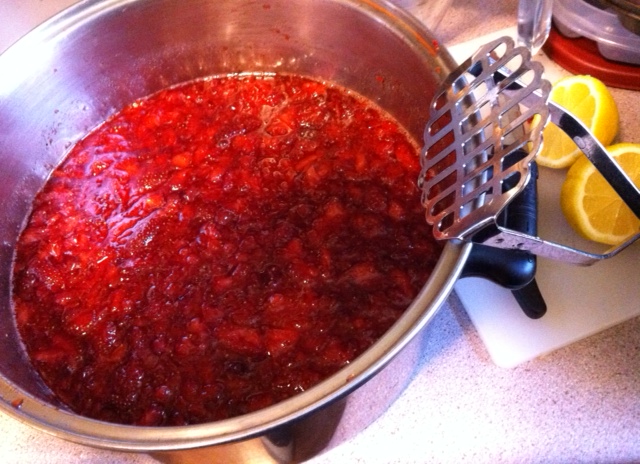
Bring mixture of 8 cups strawberries (crushed), 6 cups sugar and 1/3 cup lemon juice to a boil slowly. (make sure sugar is dissolved so it doesn’t stick to the bottom). Boil for about 30 minutes or until the mixture thickens and passes the ‘gelling test’. (Coat a spoon with the jam and move it away from your pot, watch the jam slide off the spoon, if it falls in chunks instead of drips, its ready).
Pour your hot jam into the hot jars leaving a quarter inch of headspace. Keep your rims clean! Place your snap lid on the jar and screw the band on until finger tight. Boil filled jam jars for 10 minutes. Pull out and let sit for 24 hours (do not move them).
Traditionally, items canned like this last for about a year (not exactly long-term food storage) but I’ve used them after the year has come and gone.
 BurroakBurrow