Blog Archives
Bee Plants
I believe it was Albert Einstein who said that without bees, the human species would go extinct within four years.
Honeybees are so essential to our entire food supply and they’re dying off in scary numbers. Between colony collapse and sheer lack of food, our honeybees are disappearing. In my city, we can’t own bees without a whole lot of paper work and fees and inspections etc, etc, so I decided to dedicate part of my garden to bee friendly plants.
Since I live in Canada, I can be somewhat limited to what plants will live here. This year the weather has been especially all over the place (to the point where several people I know had their furnaces on last night, almost a full week into June) and I’ve only seen two honeybees in my yard. But here’s a quick list of what I’ve planted that my local bees seem to love.
Lavender – I have several lavender plants that I used to use for my soap business but even when I harvest, I leave several stalks that are constantly visited by our bees.
Bee balm – (monarda) produces amazing spiky flowers and is always surrounded by bees.
Strawberries – although I don’t grow these specifically for the bees, the flowers bloom fairly early and give the bees something to pollinate before the other plants show up.
Clover – I have a small piece of the property that isn’t maintained and it is crawling with clover. Anytime I pull up clover from any other part of the lawn, I throw it there to help seed it. I’m sure we’ve all heard of clover honey?
Lilac – although this plant belongs to one of the neighbors and not me, I stay away from it because its surrounded by bees while in bloom.
Most of these plants are fairly hardy regardless of where you are in North America, so consider placing some of them on your land. We all need bees. Please try to avoid commercial insecticides as well and try a natural alternative such as companion planting, soapy water or manual pest removal.
Check out this book:100 Plants to Feed the Bees
Newsprint and the Prepper
I use newsprint for a lot of projects around the house. We get two sets of advertisements and local news once a week and it adds up to a lot of paper. Over the summer I use this paper to start fires but here are three things I do with it in the other seasons.
1.) Shred: I save my flyers for about a month and then spend an hour shredding them (by hand). I keep my shreds in a tupper bin until the summer time when I make them into paper bricks for the fire. I got my paper brick maker from Lehmans (www.lehmans.com) This is an easy and free way to have heat and cooking material.
2.) Spread: Once spring comes and I re-dig my garden beds, I spread newsprint on the bottom. This keeps the weeds to a minimum by suffocating them. By the time the papers disintegrate, the weeds have been killed. I usually do a layer about 3 sheets of newsprint thick.
3.) Seed: I use newsprint to make little pots for starting my seeds. There are little gadgets you can get to help you do this (check here). They stand up fairly easy in my mini greenhouse and the roots have no trouble pushing their way through the wet paper. You can take the whole pot and put it in the ground as is.

Dehydrating Turnip
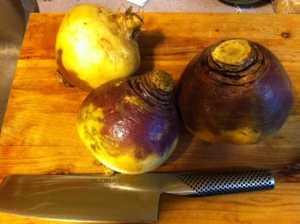
Turnips, along with most other root vegetables, are fairly cheap and easy to dehydrate. This time of year, they are very easy to find and usually on sale.
Wash and peel your turnips

Slice into thin pieces, the easiest way to do this is to use a mandolin slicer.
You can then blanch them (I don’t blanch my turnips) and then place them on your trays.
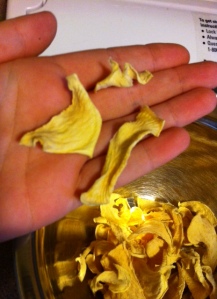
I leave them on overnight at 125 F to make turnip chips. You can eat these as is. They are great with dips as well. Or you can rehydrate them and use them as you would fresh turnips. Try putting the dehydrated pieces in soups and stews.

Using the Tomato Harvest: Salsa!
Every year, I make my own salsa and can it. Every year I make more than the previous year and I still haven’t managed to be able to make it last over the winter. My vegetables this year in the garden did terribly, so when I saw that the grocery store had 50 lbs of tomatoes on for $10, I jumped all over that chance.
Here’s my favorite salsa recipe. I got it originally from my friend Judy (may she rest in peace) and altered it because she doesn’t add nearly enough heat for my family.
Salsa:
8 cups of Roma tomatoes (peeled and chopped)
4 cups onions, chopped
4 cups sweet peppers, chopped
1/4 cup vinegar
5 cloves garlic (or to taste)
Jalepeno pepper or to taste (I usually add a lot of jalepenos and Thai chilies but we like it really spicy)
1/4 to 1/2 tsp oregano (to taste)
1/2 tsp coriander
2-3 tbsp salt
Cook until veggies are done then add a small can of tomato paste. Cook for another
5-10 minutes then put into sterilized jars. Place your filled jars in a water bath canner and process for 20 minutes.
Home canned foods can last a long time but are usually best if consumed within a year to 18 months of canning.

Heat Illness
All over North America, we have been having crazy heat waves. In some places, people have been without power due to bad thunderstorms. Today its only 91° where I am but the other day was 114° and most of my family was sick due to the heat (not to mention sweaty and miserable).
Its important to recognize the signs and symptoms of heat illnesses (hyperthermia), especially in a survival situation where you can’t just pop into the mall with air conditioning.
There are a few levels of heat illnesses which progressively get worse if you don’t take care of yourself.
Heat Cramps: are caused by not having enough water and being too hot. Symptoms include: thirst, sweating, irritability, gastro symptoms (nausea, vomiting) and of course cramps (particularly in the abdomen).
Heat Exhaustion: excessive sweating, dizziness, headaches, confusion, COOL to the touch as well as all the previous symptoms. Treat these people as being in shock (but do not cover with a blanket, instead remove excessive clothing).
Heat Stroke: skin will be hot in heatstroke because the mechanism that makes you sweat to cool you down isn’t working anymore. The person suffering might be in shock, confused, as it gets worse you can start seeing things such as unconsciousness and seizures.
Always try to get the victim out of the heat (indoors or into shade). If they are conscious get them to drink cool water (but do not force them if they vomit). To increase cooling you can sponge them with cool water or cover them with cool wet sheets. Obviously, if available, get your person emergency medical attention as soon as possible.
Try to avoid heat illnesses by avoiding heavy work in severe temperatures, wearing hats and staying hydrated.
Strawberry Jam – no pectin
Strawberry jam is a yearly occurrence in our house. Everyone loves strawberries (so much in fact that last year when I purchased two flats of strawberries, they were gone in a few days before I could make the jam). I always use local strawberries because the flavor is amazing (so much more so than berries that have ripened on a truck).
This is the recipe my grandmother used, I’m pretty sure it’s the Bernardin recipe, so clearly I don’t own it.
Place 8 250ml size jars (available here) on a rack in a water canner and heat to a simmer (make sure water is covering the jars). Heat snap lids separately. Keep hot until ready for use.
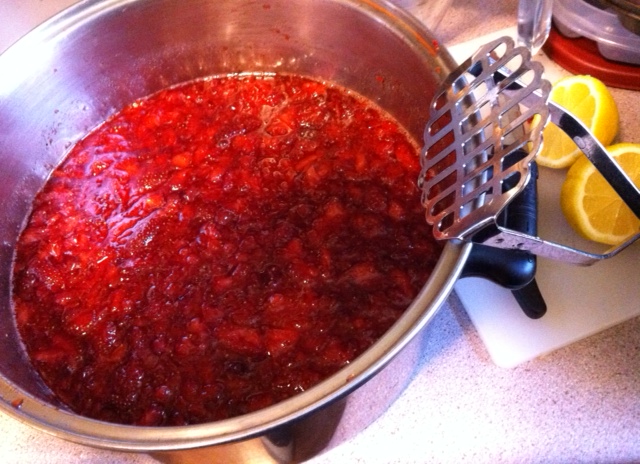
Bring mixture of 8 cups strawberries (crushed), 6 cups sugar and 1/3 cup lemon juice to a boil slowly. (make sure sugar is dissolved so it doesn’t stick to the bottom). Boil for about 30 minutes or until the mixture thickens and passes the ‘gelling test’. (Coat a spoon with the jam and move it away from your pot, watch the jam slide off the spoon, if it falls in chunks instead of drips, its ready).
Pour your hot jam into the hot jars leaving a quarter inch of headspace. Keep your rims clean! Place your snap lid on the jar and screw the band on until finger tight. Boil filled jam jars for 10 minutes. Pull out and let sit for 24 hours (do not move them).
Traditionally, items canned like this last for about a year (not exactly long-term food storage) but I’ve used them after the year has come and gone.
Starting Seeds
Starting seeds doesn’t have to be rocket science. You don’t need green houses and heat lamps. Kindergarten children plant beans in their classrooms to learn about spring time.
All you need is a cup, some paper towels or napkins, some water and a window sill.
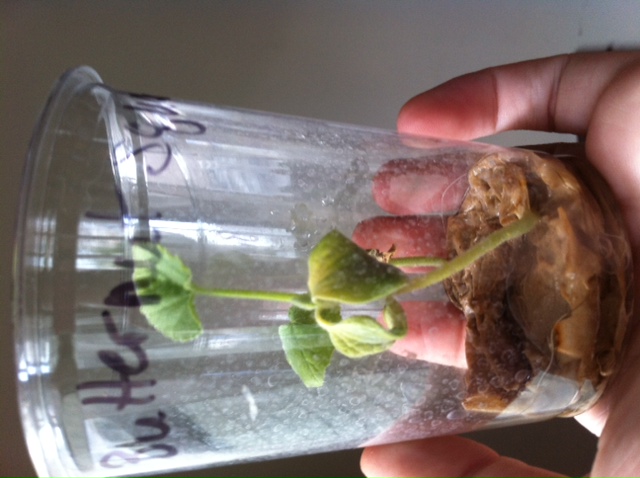
I use clear plastic party cups to start my seeds. I stuff a little bit of brown paper towel in the bottom and then add water. I let the paper towel absorb as much water as it can, then pour any extra out. I put two or three seeds in each cup then set the cup in a warm, sunny window sill. After a couple days to a week, the seeds should start showing some signs of life. If they haven’t, don’t give up, recently my cantaloupes took almost three weeks to start sprouting. Keep your paper towels moist (but don’t drown your little roots) and wait. Once your plant has developed a good size tap root (the biggest root in the middle that the other roots sprout from), carefully pull the plants out of the cups and put into some good quality potting soil until it’s warm enough to plant outside.
This is how we start the majority of our seeds. Currently we’ve got every window sill full of beans, peas, carrots, peppers, chilies, butternut squash, sunflowers, radishes, cucumbers and countless herbs. This is also great for any little helpers you might have hanging around (children, grandkids?), they usually get very excited to see their little projects grow.
I’ve personally used these seeds in the past and was very pleased with quality.
Regrowing Your Celery
The next time you’re working with celery, don’t throw out the little bit at the root end. If you save the end piece, you can regrow the celery and have another whole stalk for free. I’ve been doing this personally only for a few months but I have very impressed with the results, I’m sure you will be too.
Cut off the end of your celery stalk and place the bottom piece in a container. I usually use a bowl or a little Tupper with a wet napkin or paper towel. Place the bowl in a sunny spot, like a window sill and leave it there. Make sure the napkin or paper towel stays moist. The outer pieces of the celery will brown and rot but the middle pieces will shoot up.
When you have about an inch or so of growth, stick the celery piece (which should now have a little bit of roots) into some good potting soil and watch it grow! When you need some celery, cut it off of this plant but leave the plant in the ground, it will continue regrowing as long as you take care of it.
I love this idea because I like to dehydrate celery; it works so well and is a great flavor to add to many recipes. So having free celery instead of paying over $3 each time is awesome.
I have also used green onions the same way as well as cooking onions, leeks and garlic. Experiment with it! Have fun!

 BurroakBurrow