Blog Archives
March Stock Up
Posted by S
March has so many different holidays in many cultures so there is all sorts of basic ingredients on sale! What better time to stock up?
For holidays we have (in order) Ramadan, Purim, St Patrick’s Day, Holi, Palm Sunday and Easter. In addition to the items on the stock up list, which is fairly generic, you can also find on sale lots of dried fruits, nuts and seeds. Corned beef and cabbage should be on sale near the middle of the month (and cabbage dehydrates wonderfully). Of course with Easter there’s mountains of sweets and hopefully we will see turkey or ham be on sale.
Additionally it’s a good time to grab oxygen absorbers, candles and garden seeds.

Posted in canning, dehydrating, food storage, gardening, preparedness
Tags: dehydrating, food storage, gardening, homesteading, march, pantry, preparedness, preppers, prepping, stock up list, stockup
Dehydrating Apples
Posted by S
I try never to waste food, but especially right now during the Covid-19 pandemic, it’s not so simple to just go to the store.
I had a bag of apples that the kids just weren’t eating fast enough so I decided to dehydrate them before they went bad (they were already on the soft side).
I used a mandolin slicer (you can get the same one here) to slice the apples thinly. I put them in water with a bit of lemon juice while slicing to keep them from turning brown.
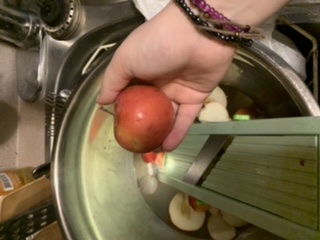
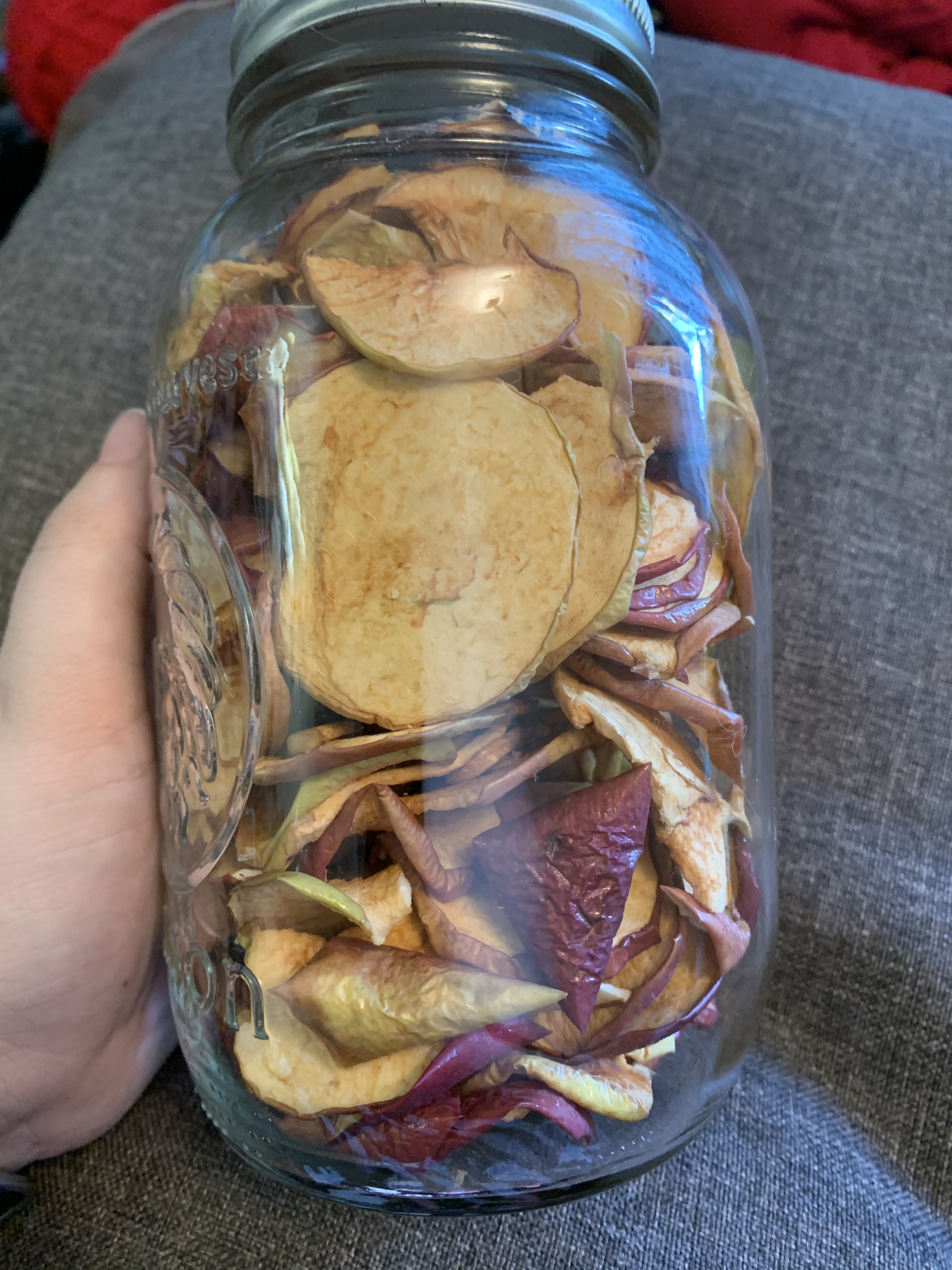
I then spread them out on my dehydrator and turned it on low for about 12 hours. I like to add the chips to muffins and loaves but you could also rehydrate them and turn them into apple sauce. My dog likes to eat them as treats and they’re a lot healthier than some other treat options.
To store, I put them in a mason jar with an oxygen absorber. You could also vacuum seal them but I don’t expect mine to hang around too long as I’m already planning ways to use them.
Posted in dehydrating, food storage, preparedness
Tags: apples, dehydrating, food storage
Dehydrating Turnip
Posted by S
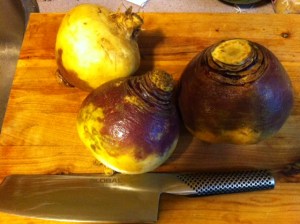
Turnips, along with most other root vegetables, are fairly cheap and easy to dehydrate. This time of year, they are very easy to find and usually on sale.
Wash and peel your turnips
Slice into thin pieces, the easiest way to do this is to use a mandolin slicer.
You can then blanch them (I don’t blanch my turnips) and then place them on your trays.
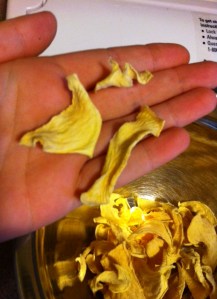
I leave them on overnight at 125 F to make turnip chips. You can eat these as is. They are great with dips as well. Or you can rehydrate them and use them as you would fresh turnips. Try putting the dehydrated pieces in soups and stews.
Posted in dehydrating, food storage, gardening, preparedness
Tags: dehydrate, dehydrating, food storage, gardening, preparedness, prepping, rutabagas, turnips
Preserving Bananas
Posted by S
Bananas are a cheap and easy source of vitamins. The only problem is they turn really bad really quick. Luckily, there’s a few easy things you can do to extend the lifetime of your bananas.
Freezing bananas is ridiculously easy. I know several people who for ages would just throw away their over ripe bananas and then buy new ones to make banana bread or muffins. Don’t!
Throw your spotty or overripe bananas in the freezer as is, peel and all. The skin will go black but they are easy to slip out of the skins once they defrost and easy to mush for your baking needs.
Bananas can also be used in the place of eggs in vegan baking (about one medium mashed banana = one egg, or about 1/4 cup)
To keep your fresh bananas longer, separate the bunch. The ripe bananas release a gas that quickly ripens other bananas close to them. Once your bananas are at the ripeness you prefer, put them in the fridge. The skin will blacken but the banana will stay at your preferred ripeness for a few more days than if they were on the counter. (I’ve heard up to 14 days but I’ve personally only gone to about 5 in the fridge.)
Finally, dehydrating them. To dehydrate bananas, just slice them thin and lay them on the dehydrator trays. They take a long time because of the moisture content but they make amazing banana chips. (A tip my kids found on YouTube: dip your sliced bananas in dry pudding mixes before putting them on the trays. Its messy, so wear gloves but it tastes so good!)
Here is an affiliate link for the dehydrator I have https://amzn.to/39aoRbO This means if you buy the dehydrator through my link, I will make a little bit of money at no extra cost to you!
Posted in dehydrating, food storage, preparedness
Tags: bananas, bananas in fridge, dehydrating, food storage, freezing, preparedness, preserving, vegan baking
Coffee for Preppers
Posted by S
I don’t know about you, but for me its hard to function without at least one cup of coffee in my system. If I don’t get that first cup…well, its just better that I do. This is technically an addiction to caffeine and going through a SHTF scenario at the same time as going through withdrawal, no thanks.
So I looked around for the best way to store coffee for the long term and found some contradicting information. I contacted a family friend, Dave Cook, who owns the Fire Roasted Coffee Company in London Ontario (Canada) for some answers.
In regards to the storing green (unroasted) beans versus roasted beans, Dave had this to say:
“Green coffee is a neutral grain which does not generally deteriorate at all in the first year but slowly degrades after that but most people would not notice especially if it is the only option. Coffee is very easy to roast over open fire…”
I have always been of the opinion that freshly ground coffee tastes much better than when it has been pre-ground and stored that way. Dave agreed: “For grinding there is a variety of hand crank compact grinders and yes, fresh grind is much better as whole bean retains much better flavour as it is one big particle as opposed to many small ones” (Check out this hand grinder I found on Amazon!! https://amzn.to/2xcrf4T )
I asked Dave if storing in Mylar bags with oxygen absorbers (like most of us preppers would be doing) is best.
“It is possible to store roasted coffee and in an oxygen deprived environment it will keep reasonable flavour but will degrade rapidly when opened. Heat is actually the biggest enemy to coffee as it oxidizes the naturally present oils and turns them rancid. If cost of inventory is a factor green unroasted coffee is half the price of roasted.”
What would Dave, an expert, store for himself?: “In a perfect world I would store both green and roasted coffee with the roasted filling short term need or if it is unsafe to go outside, with the green coffee offering long term supply and the ability to enjoy world class coffee in potential world of chaos and social disorder.”
Dave closed by reminding us: “If your readers live in the area of the equator, there also is the opportunity of growing their own or harvesting wild crops.”
I love Dave’s coffees and fully recommend them to anyone! I’d like to thank Dave and the Fire Roasted Coffee Company for answering my questions.
To contact them:
http://www.fireroastedcoffee.com
online@fireroastedcoffee.com
Twitter: @fireroastedcafe
Facebook: http://www.facebook.com/fireroastedcoffee
Drying Herbs
Posted by S
Whether you have them for mundane or medical reasons, properly drying your herbs is important.
Most herbs are easily dried by hanging them upside down in a cool area where they will get a bit of air flow. Before I had my dehydrator, I hung my herbs up in my closet. You can also dry them in the dehydrator at the lowest setting, by far the quickest method, or you can dry them in the oven on the lowest temperature with the door propped open by a wooden spoon to allow for airflow.
Herbs are properly dried when they are easily crumbled between your fingers.
Be sure to store your dried herbs in airtight containers in a cool dry place. A lot of people store theirs above the stove or close to it. This is one of the worst places because the heat will degrade your herbs, they will lose potency in flavor and go stale much quicker. To store large quantities for your preps, place your herbs in a food saver bag or a mylar bag and add an oxygen absorber. If you have to open the bags, quickly remove the amount you need and then reseal the bags as soon as possible to maintain quality.
Posted in dehydrating, food storage, foraging, gardening, preparedness
Tags: dehydrating, drying herbs, food storage, foraging, gardening, medicinal herbs, preparedness, prepping, spices
Peppermint
Posted by S
Peppermint is a great herb that is easy to grow in most climates although it does best in shade with moist soil.
Homesteaders and preppers who keep bees are fond of this plant because it produces a lot of nectar that will attract the bees to the plant. For this reason, it is advised to grow peppermint away from the entrances of your home. It spreads easily and quickly so it is best to grow it in a container.
Dried peppermint leaves make an excellent tea that can help calm upset stomach, aid digestion and can treat flatulence. The essential oil of the peppermint plant can be used as a pest repellent. Mice, ants and squirrels do not like the scent and it can be sprinkled around your food storage or entrance points of the pests. For aromatherapy, the scent can be used for migraines, stimulate the senses, and it has a cooling effect on the skin. It can be used for nausea and motion sickness but the oil should be avoided during pregnancy.
Make sure to buy peppermint plants as there as no seeds! They grow easily from cuttings if you have a friend with some.
Posted in food storage, gardening, preparedness
Tags: dehydrating, essential oils, gardening, natural pest repellent, nausea, peppermint, preparedness, prepping, teas, vomiting
Making Your Own Dehydrated Dog Food
Posted by S
When it comes to preparing, sometimes our furry friends are overlooked.
Dog food can be expensive, bulky and depending on what you feed them, it can expire quickly.
A cheap and easy way to store dog food long time is to dehydrate your own ingredients (Here is my beloved dehydrator: https://amzn.to/39aoRbO ) and mix it. When ready to serve, you add a bit of water and you’re set.
Dogs need a certain balance of nutrients in their diet but its simple to figure out the ratio.
They need about:
1 part meat
1 part grain
1 part vegetables
There are of course people that feed their dogs grain free, but that’s up to you.
When dehydrating meat, I usually make sure that its fully cooked first and then dehydrate it from there.
You can use your table scraps but make sure that you cook your meat plain, adding flavorings, salt, pepper and other things later, just to be safe.
Vegetables you could do raw or cooked, again, make sure ther’es no added butter or anything that could go rancid
if not dehydrated properly.
And as for grains, I usually use rice or oats for my dogs (as one of them has a sensitive stomach).
To make the mixture, I gather all my dehydrated ingredients and buzz them up in a food processor so it makes a fine powder. Then I measure about a cups worth of each, put it in a bowl and mix it thoroughly.
Then just add to a jar or a mylar bag with an oxygen absorber and store in a cool, dry place.
Vegetables to USE: spinach, celery, carrots, peas, green beans and sweet potatoes are all puppy favorites.
Vegetables to AVOID: avocados, onions, garlic and tomatoes have all been listed as toxic at some point to dogs, so I felt it best to add them here although I know some people who swear by giving their dogs garlic (I don’t.)
My pups also like fruits such as banana, apple, watermelon, and blueberries. I have dehydrated these separately as treats.
Next week I’ll cover our feline companions.
Posted in dehydrating, food storage, recipes
Tags: dehydrating, dog, food storage, pet food, preparedness
Preserving Corn (While We Can Afford To)
Posted by S
Thanks to the weather conditions all over North America, crops are failing at alarming rates, especially corn. The price of corn has sky rocketed and I can only assume will continue to do so. Corn is of course animal feed but it is also a major ingredient in just about everything we buy today. I went to the farmers market and was asked to buy corn for $5 a dozen (this of course is locally grown but not organic). Later that same week, corn was on sale at the grocery store for $2 for 10 cobs. I grabbed as much of the $2 corn as I could (it also happened to be local).
You can freeze a cob of corn as is. No prep. Don’t shuck it or cook it, just throw it in the freezer (although I usually look for bugs and give it a rinse first). To cook your frozen cobs of corn, you can cook them with the husks on (takes a bit longer) or you can husk them while frozen and just throw the frozen corn in the boiling water just like you would if it was raw. The corn is best if used before 8-12 months in the freezer.
Corn can be canned using a pressure canner. Because it is a low acid food, you cannot properly can corn in a water bath canner. Make sure you use an USDA approved corn canning recipe.
The easiest and most space effective way for me to preserve corn is of course my ever faithful dehydrator (which you can purchase here). To do this, you can cook your corn as if you were going to eat it. Once it is cool to the touch, slice the corn off the cob. Break up the little pieces of corn and spread it out on your dehydrator trays. It takes around 6 hours (or more depending on the humidity in your area) for the corn to dry. I find frozen bagged niblets of corn dehydrate a lot faster (and sometimes nicer) than your own cobs. Once it is dehydrated, you can enjoy it as is for a snack. It is sweet and crunchy (make sure you drink lots of water). You can also grind it into corn meal or corn flour. You can add it, as is, to soup or stews.
I’m personally going to do as much as I can. There has been rumor of the cost of corn going up to $9 a bushel in some areas.
Make sure to store your dehydrated corn in a cool, dry area in a airtight container.
Posted in canning, dehydrating, food storage, preparedness
Tags: corn, dehydrating, food storage, freezing corn, preparedness, preppers, preserving
Dehydrating Citrus – and Why It’s Important
Posted by S
Vitamin C is a very important nutrient that seems to be lacking in a lot of survival foods. Getting enough vitamin C is vital in an emergency situation. It is necessary for collagen synthesis (collagen is what heals your wounds, and knits the skin back together), without it your new wounds may not heal properly and older cuts may start to fall apart.
Enough vitamin C can cut back on how often you get colds and flus and cut back on how much they affect you. It can also delay the onset of certain neurological disorders such as Alzheimers. It is essential for drug metabolism, helping medications to reach their full potential in your system.
Sources of vitamin C include: broccoli, sweet bell peppers, sprouts, kale, spinach, tomatoes, strawberries and of course citrus fruits. Citrus can be found easily and cheaply by almost everyone and it is so simple to dehydrate.
Pick nice, firm just ripened fruits. Cut into thin wheels (1/4″) and lay on your dehydrator trays. Using a temperature controlled dehydrator, set it to 125° F. It takes about 6-8 hours depending on the humidity in your area, it could also take more. (Here’s my dehydrator: https://amzn.to/39aoRbO )
To use your citrus, you can place it in glasses of water or juice to add flavor or you can powder the inner parts to make juice mix. Make sure to store your fruit in airtight containers in a cool dry environment.
Posted in dehydrating, food storage, preparedness
Tags: citrus, dehydrating, food storage, lemons, limes, oranges, prepping, survival