Blog Archives
Another Storage Recipe: Scones!
Here’s another recipe you can make using your food storage. I have made this with dehydrated versions of the ingredients and it works well. This is a traditional Irish scone, passed down through the family.
2.5 cups flour
1 tsp baking soda
2.5 tsp baking powder
3 tbsp sugar
1 tsp salt
1/2 c butter
1 egg
1 c buttermilk to mix. (you can also use water or 2% milk for this, it just tastes way better with buttermilk)
You can add a great deal of different things to these. My favorite is to add cheddar cheese (about a cup worth). I have also added raisins, currants, lemon zest, garlic powder, poppy seeds, etc, etc.
Mix it into a thick dough. (You may need to add more milk or more flour). Roll out to 1/4″ – 1/2″ thick. Bake at 375* F for 12-15 minutes.
Enjoy!
Basic Bread
I wanted to share with you a simple bread recipe. I use this recipe all the time at home and it is really easy to make with things that most people have in their long term food storage.
The recipe:
1 lb flour (regular, all purpose flour or whole wheat)
2 tsp of yeast (we keep our yeast in the fridge once opened)
1 tbsp salt
1.5 cups of warm water (not hot)
Mix your ingredients to form a dough and knead for about 10 minutes.
Place your dough in a greased bowl (I use olive oil to lightly coat the inside of a mixing bowl). Cover the bowl with a towel and put it in a warm place for about an hour to let the dough rise.
After the dough has risen and roughly doubled in size, preheat the oven to 500* F.
Punch down the dough and shape it. (It doesn’t have to be pretty. I’ve down round loaves, baguettes, regular loaves and buns with this recipe.)
Place in the oven and turn it down to 450*F. Bake for 30-40 minutes. Remove from the oven and let it rest for at least 20-30 minutes before cutting. It is still cooking during this resting period.
Cut and enjoy. Bread may not be glamorous but in a SHTF situation, it can keep you alive and stretch out any sort of stew or soup you may be eating.

Simple Jar Candles
There are a lot of ways to make candles. This is only one of them and it is fairly simple. You can get fancier if you want, but this is survival and preparedness, not a dinner party. As such, I have not included instructions for colorants or scents.
Needed:
A jar … you can use anything from baby food jars to pickle jars and mason jars are great, I’ve used small jars that I got at a dollar store, but I’ll use a small mason jar to show you. I like jars because they have lids and can be kept dry but feel free to use anything such as a milk carton, a tea cup or an old washed apple juice tin.
Wax: beeswax, paraffin, old used candles anything! I’ll show you how to use recycled wax since it’s easy and cheap. Paraffin is easily found at a grocery store with the canning supplies (it’s not usually used for candle making but will do in a pinch. It has a lower melting point than candle paraffin that’s all) Pictured: old candles about to be chopped.

Wick: I buy these from a wholesaler but you can get them at craft shops or make them with string but the string doesn’t work as well as a proper wick. The easiest thing is to use a wick that has the metal piece at the bottom. ( Get wicks here )
Pot and bowl: I usually use a container specifically for melting wax but most people will be fine with using a bowl over a pot of very warm water. You don’t want the water to be boiling over and you don’t want to heat the wax directly over a heat source because the wax can ignite at a very low temperature.
Safety Notice: Hot wax can burn! If you get it on yourself, run cold water over it and then peel off the hardened wax. If your wax catches fire while on the stove (never happened to me but you never know…) DO NOT USE WATER to put out the flames! Turn off your heat source and smother the flames with a pot lid or fire blanket etc. I shouldn’t have to say this but I am not responsible for what you do! If you hurt yourself during this project, you are on your own and I am not liable.
Put a pot of water on the stove at a medium heat. Put bowl over the pot. Cut wax into smaller pieces to allow quicker melting. Do not allow your wax to get past 170 degrees Fahrenheit. While the wax is melting, heat up your jars a bit. I usually use another pot of water to do this. You want the jars to be warm when the wax goes in to prevent the glass from cracking and to let the wax set nicely; otherwise it pulls away from the jar as it dries.
When wax is melted, use a ladle or something similar to pour the wax slowly and gently into the warmed jars (make sure you dry them off inside first). Let them sit until hardened. (probably a few hours for all of the wax to be completely set.
Pictured: my finished product… smells vaguely cinnamony (due to old candles being scented).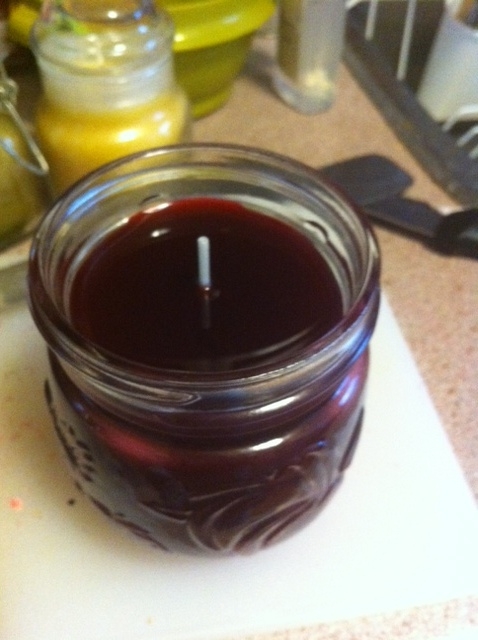
Using Coupons to Prep
I have been using coupons for about 6 months but I have increased my food storage significantly. There is some truth to the popular belief that you can’t buy “good” food with coupons. In my opinion, if you’re starving, any food is good, basically.
I have gotten a lot of food for free or next to free including: pasta noodles, canned vegetables, pasta sauces, soups, soda, bread and yes, even milk.
I’m not too worried about finding produce coupons since I grow my own or buy from the local farmers market, so dried and canned things are great for my food storage.
I have also got for free: laundry soap, shampoo, soap, body wash, toothpaste, mouth wash, feminine products and other hygiene related items. Not to mention a lot of free pet food and supplies (including free kitty litter!)
Most of these are from coupons that you can get sent to you in the mail. I get a coupon (ex: $1.00 off whatever, then wait for whatever to go on sale for a good price and use my coupons. I have found some great prices and got things for .50 cents or free.) Before anyone complains that this sort of thing is only possible on extreme couponing or only in the United States, I’d like to point out that I usually only use one or two coupons at a time, I have never stacked coupons and I do not live in the States. Anyone can do this; it is easy, simple and free.
Another great way to increase your storage is to sign up for free samples. Again, there is a lot more available in the States (*shakes fist at the lucky buggers*) but there is plenty other places. I have a lot of shampoo samples and the like, which fit very well into a bug out bag or can be used to barter.
Again, this is free and simple, it just takes a few minutes of your time to search out and sign up for some of the sample programs. The only thing I would advise is setting up a separate email address because most of the programs send you emails about their specials etc, and if you don’t check your email every day, it can add up quickly.
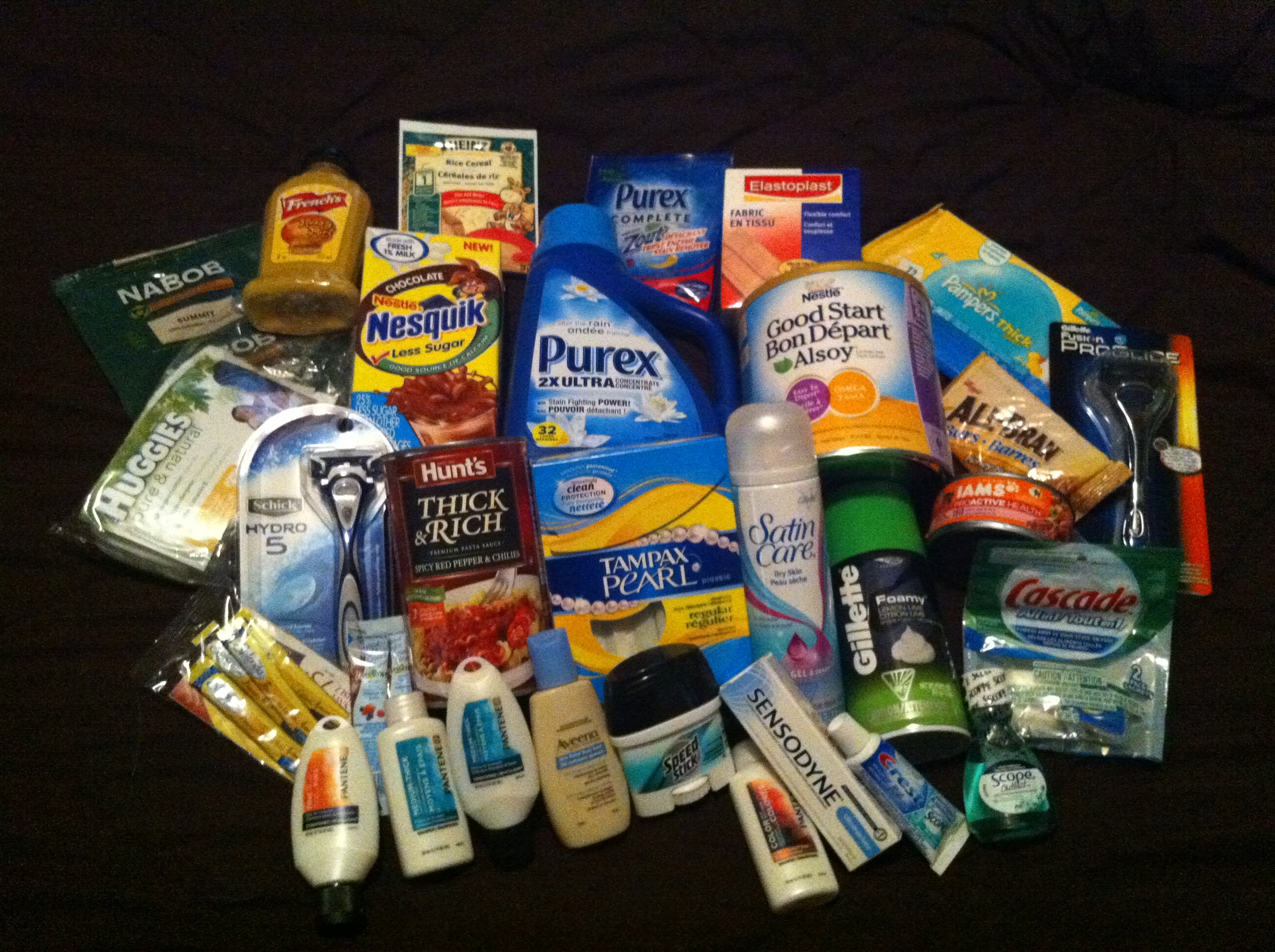
The items in the picture are all things that I have gotten for free either by using coupons or through sample programs, most of the things I have multiples of.
So try it out, you can save money and potentially build up some storage for free!
Knitting for Preppers

I knit. Sometimes for fun, sometimes for gifts, always for entertainment. After talking with some other great prepper ladies, I convinced them, and my family that my hoard of yarn is, in actuality, a prep in itself. I can knit hats, scarves, sweaters and the list goes on.
Where I live, it gets pretty damn cold and in a SHTF situation, not everyone can knit, therefore not everyone will have what they need to stay warm once their original stuff wears out. I think I should be able to barter a blanket or a hat for something I might need, be it a can of soup or a few rounds of ammunition etc.
Now depending on feedback, I may give a quick beginner’s how-to for knitting. But for the meantime, find some basic patterns and make up some stuff. Hats, mitts, blankets etc. Don’t worry about the room they take up, if you put them in freezer bags and squeeze all the air out, they get quite small. Or even better, use a vacuum sealer machine for foods and they’ll get super small.
Doesn’t snow where you are? You could make simple things such as pot holders or wash cloths, a lot of people cooking over fires are going to get burned and will want the protection. How about children’s toys?
Here’s a basic hat pattern my DH’s grandmother taught me:
Cast on 76 stitches (more or less depending on weight of yarn, but keep in mind it stretches well).
I use a size 8US needles for an adult hat, smaller needles for smaller heads. (Get needles here! )
Knit row 1
Purl row 2
Continue alternating in this pattern for around 6 inches.
When ready to decrease, do so on the knit side.
To decrease: knit 5, knit together 2, knit 5, knit together 2 (continue this pattern to end of row)
Purl next row
Knit 4, knit together 2, knit 4, knit together 2 (continue this pattern to end of row)
Purl next row
Continue this pattern
When at end, knit 2 together all across. Then purl row.
Cast off final knit row. Sew together. Voila you have a basic rolled brim hat.
If you don’t like the roll, just knit every row instead of alternating purl rows. If you do this, I find its better to do more than 6 or so inches so that you can fold up the brim for better fit.
These hats are simple to throw together, they don’t take more than a few hours to make one and they are very forgiving if you happen to make any mistakes. Good luck!
 BurroakBurrow