Blog Archives
Dehydrating Onions
Onions are such a versatile vegetable. They are cheap and add so much flavor, just about any savory recipe is better when onions are added. Dehydrating onions is quick and easy.
Begin by chopping your onions to the desired size. I usually do large flakes so the pieces don’t fall through the holes on my dehydrator but you could always mince them. Try to remove the thin pieces of skin that clings between the layers. (You can get a dehydrator like mine here)
Dunk your onion pieces into boiling water for about 30 seconds to a minute. They will turn slightly translucent when they are ready and they will be softer. Put them in a strainer and run cold water over them to stop the cooking process.
Pat the pieces dry with some paper towel and remove any extra bits of the skin (which will now be mushy and easy to remove). Arrange the pieces in a single layer on your dehydrator and turn it on.
My dehydrator doesn’t have a temperature control so I just let it run for about 5 hours to have the onions as dry as I need them. They end up paper thin. Recommended temperature for dehydrating vegetables is 135°. I recommend dehydrating these outdoors unless you want your house smelling like an onion factory.
Now here’s a recipe you can use your onions for:
Dry Onion Soup Mix
1 cup dehydrated onion flakes
1/3 c bouillon
1/4 tsp sugar
1 tsp parsley
Store the ingredients in an airtight jar until ready for use. I also like to throw in some other dehydrated veggies (carrots, garlic, celery and whatever else catches your fancy.) To make into soup, add 4 c of water, or for dip, add to a tub of sour cream.

Dehydrating Broccoli and Using It
To dehydrate broccoli, first cut it into bite sized pieces and blanch for about a minute in boiling water. This will help to maintain the green color (otherwise it goes a nasty brown). Plunge the hot broccoli into some cold or iced water to stop the cooking process. Drain to get as much water off as possible. I then spray with a bit of lemon juice (also helps the green color). Place on your dehydrator trays (not touching otherwise you get damp spots). It usually takes my dehydrator about 6 to 8 hours to dehydrate broccoli. Store as you would other dehydrated foods. Here is the dehydrator I use: (Excalibur Dehydrator)
To use your broccoli, here’s a simple but tasty broccoli soup recipe using things that are probably already in your food storage.
Broccoli Soup
3 cups chicken broth (approx 2 cans. You can also use water or water with bouillon cubes)
5 cups rehydrated (or fresh) broccoli (approx 2.5 cups dehydrated)
1.5 cups fresh (or rehydrated) onions (approx 3/4 cups dehydrated)
2 bay leaves
6 tbsp butter (can also use canned butter or butter powder)
7 tbsp flour
3 cups milk (can use reconstituted powdered milk)
Bring chicken broth (or water etc) to a boil. Add broccoli, onions and bay leaves. Reduce heat and simmer until broccoli is tender. Remember to remove your bay leaves.
In a separate saucepan melt butter and stir in your flour to make a roux (paste). Slowly stir in the milk and incorporate it into the roux. Cook until thickened. Add your broccoli mix slowly. Heat and stir until thick.
If you have no butter and flour to make a roux you can also thicken your soup with cornstarch (make sure it boils to cook out the cornstarch) or potato flakes.

Dehydrating Carrots
I like to dehydrate my own vegetables. I find it is cheaper than buying the #10 cans of dehydrated vegetables. My own dehydrator is sort of lack luster. It was $30 and has large holes so I can’t dehydrate everything I would like to (saving up for a nine tray Excalibur though! ~ update: I got one and love it! You can find one here )
One of my favorite veggies to dehydrate is carrots. They are easy, get super small and I add them to a lot of different dishes (soups, stews, in the pan with roasting meats etc).
To dehydrate carrots, I first peel them and chop off the tops. I then slice them very thin ( 1/8 “) on a mandolin but I have also used a knife (doesn’t take me too long because I was a chef but could take someone with lesser knife skills all day to do the amount as thin as they should be). You need to blanch the carrots next. To do this, plunge the slices into boiling water for about a minute and take them out and put them in ice water. I usually use a metal strainer to put the carrots in the boiling water then I’m not fishing after all the little bits with a slotted spoon. I don’t normally have ice so I just rinse the slices with very cold water to stop the cooking process.
After your carrots have been blanched and cooled quickly, you arrange your carrots in a single layer on your dehydrator trays. My dehydrator has a recommended setting for vegetables (135°) so I set it and leave the carrots for a good 6-8 hours. I then test a couple of pieces of carrots by taking them off the trays, let them cool down then try to bend them. If they bend, put them back in. If they snap or crack, they’re done!
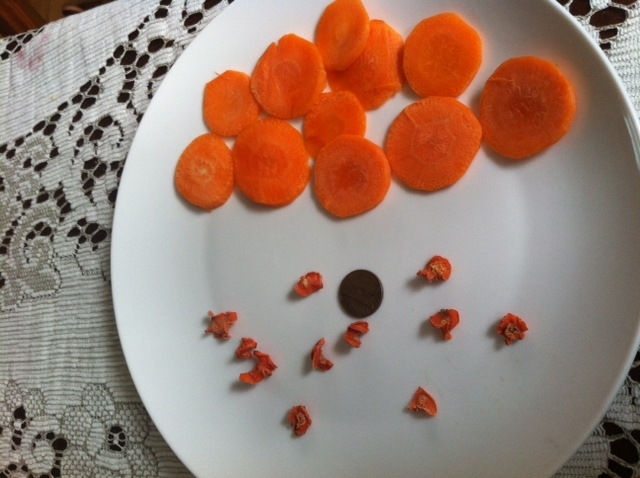
In the picture are raw sliced carrots and the dehydrated carrots. For size comparison, I’ve added an American penny.
Store in vacuum sealed mason jars in a dark place, or in mylar with an oxygen absorber for long term use.
 BurroakBurrow